Branding in the age of AI: the new aesthetic of trust


Key takeaways
- The hyper-tech aesthetic (gradients, dark UI, geometric sans) has become the visual default of an entire category. Looking futuristic no longer signals difference.
- AI is no longer a differentiator. 92% of companies in Y Combinator's fall 2025 batch build AI into their core (CB Insights, 2026). When everyone is an AI company, the look stops standing out.
- Heavy AI use is becoming a brand-trust liability. The share of consumers who would trust a favorite brand less for using AI heavily doubled from 20% to 40% in a year (Fractl, 2026).
- Only 23% of consumers trust companies to use AI responsibly with their data (Thales, 2026). People want reassurance, not novelty.
- Serif and editorial typography are returning. Not from nostalgia, but as a signal of authorship, care and human intention.
- Anthropic shows the shift clearly: warm palettes, illustration and serif type that read like an institution of knowledge, not a software company.
- The word that matters is craft. The scarce signal is evidence that a human cared.
Why are AI brands starting to look more human?
Because looking futuristic no longer sets a brand apart. For years, the formula was identical: clean sans-serif type, geometric logos, dark interfaces, gradients glowing between blue and purple, and visual nods to code and systems.
It made sense at the time. Technology companies were selling progress. They needed to look faster and smarter than whatever came before. Looking futuristic was part of the product promise itself.
Something feels different now. As AI becomes part of daily life, the brands that resonate are not the most futuristic ones. Increasingly, they are the ones that feel the most human. That is not a coincidence.
What happens when futuristic aesthetics become generic?
The look that once meant innovation becomes the default of the whole category. A decade ago, innovation was the differentiator. Today, innovation is expected. The numbers make it concrete: 92% of companies in Y Combinator's fall 2025 batch build AI into their core offerings, so AI itself is no longer what sets a company apart (CB Insights, 2026).
Every week brings a new model, a new launch, a new breakthrough. Browse enough technology websites and the visual language blurs together: gradients, glowing interfaces, abstract shapes, sans-serif or monospaced fonts, the same promise of intelligence. Call it the hyper-tech aesthetic. AI companies leaned into it hardest, which is exactly why it stopped working. The irony is sharp. As more companies try to look futuristic, fewer of them stand out.
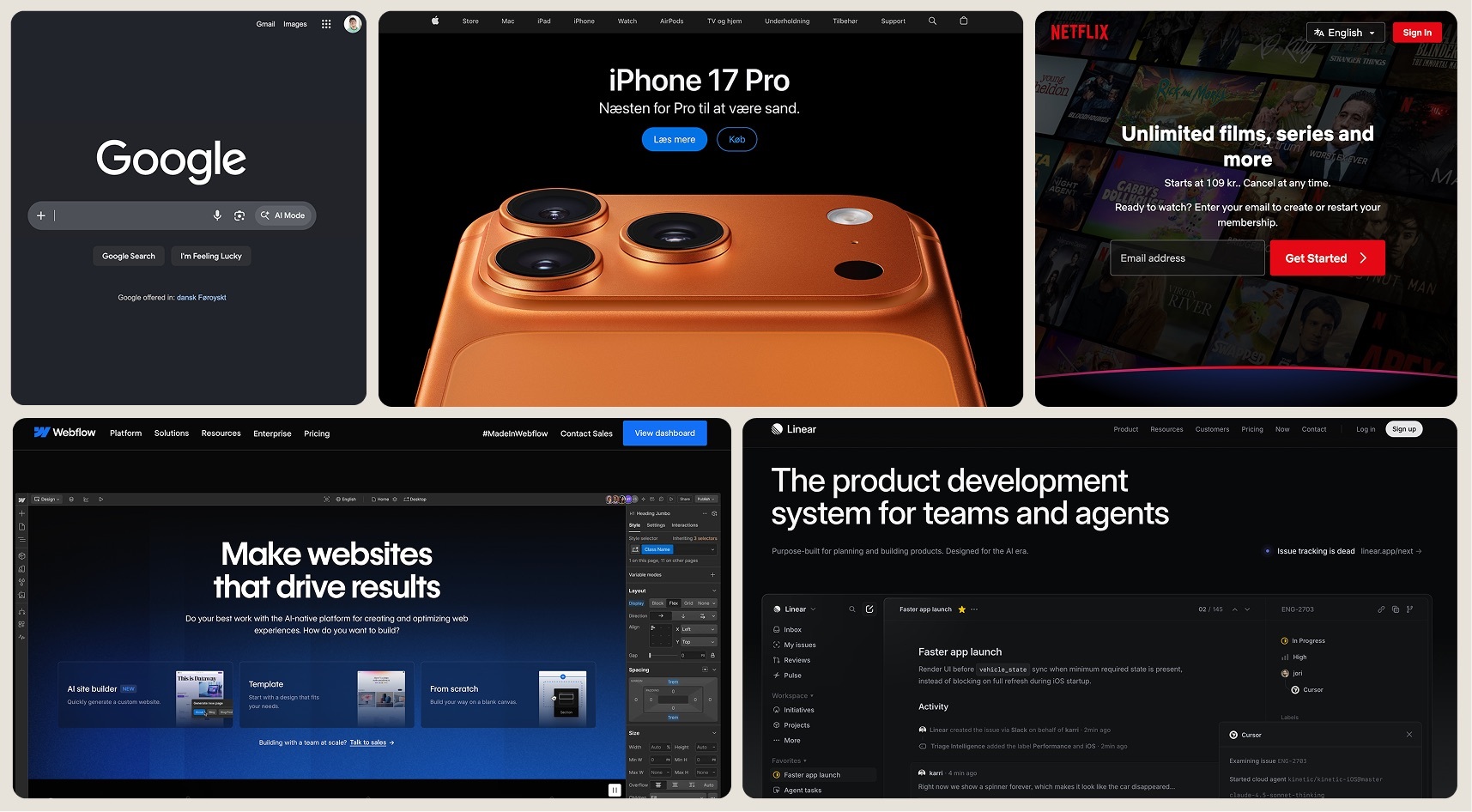
Something else is happening at the same time. The conversation around AI is no longer only about excitement. It is increasingly shaped by uncertainty. The data shows it plainly. The share of consumers who would trust a favorite brand less for using AI heavily doubled from 20% to 40% in a single year (Fractl, 2026). Only 23% trust companies to use AI responsibly with their data (Thales, 2026).
When people feel uncertain, they rarely search for more novelty. They search for reassurance. This is where branding gets interesting. Companies are no longer just selling capability. They are asking users to trust invisible systems with writing, research, analysis and decisions. The challenge is no longer proving the technology works. The challenge is making people comfortable enough to use it. Trust has become a design problem.
The old aesthetic of innovation vs. the new aesthetic of trust
Signal |
Innovation era |
Trust era |
|---|---|---|
Typography |
Geometric sans-serif, monospace |
Serif, editorial layouts |
Color |
Dark UI, blue-purple gradients |
Warm, paper-like palettes |
Imagery |
Abstract tech, systems motifs |
Illustration, human touch |
Brand promise |
Capability |
Judgment |
Feeling evoked |
Computation |
Understanding |
What it proves |
"We are advanced" |
"We can be trusted" |
What is the aesthetic of trust?
The aesthetic of trust is a visual language built on warmth, editorial design and human craft, not futuristic gradients and cold technological signals. It borrows from publishing: serif typefaces, editorial layouts, illustration and warm color. It signals judgment and authorship rather than raw capability.
For years, technology branding sold progress. Looking advanced was part of the product promise. That logic is breaking down. When everything looks polished, polish stops proving anything.
This shift is not limited to AI companies. As AI shapes how people experience products, every brand has to decide how human it wants to feel. So every brand now needs ways to signal that a person stands behind it.
Why does this matter now?
It matters because AI has changed what design has to do. The job was once to prove the technology works. Now the job is to make people comfortable enough to trust it.
What can typography tell us about trust?
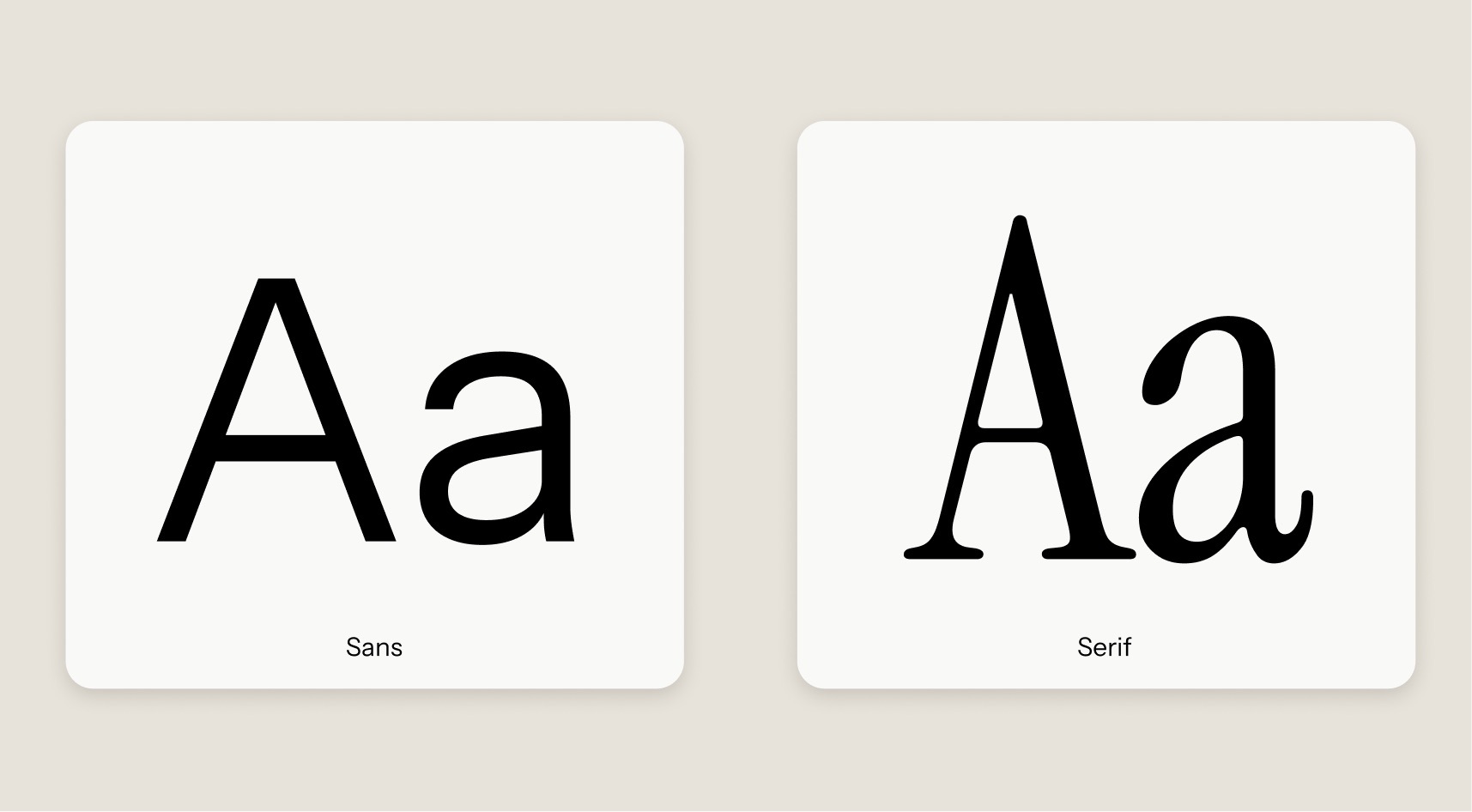
Typography carries cultural meaning, and serif type has long signaled credibility. Long before digital interfaces, knowledge lived in books, journals, newspapers and archives. For centuries, the written word was the main vessel for expertise and authority.
That visual language became embedded in how we read credibility. We do not trust books because they are old. We trust them because, for centuries, they were how knowledge was preserved and shared. The same goes for research journals and academic publishing. They became symbols of expertise by giving people frameworks to learn, verify and build understanding.
When companies borrow from publishing and editorial design, they are not borrowing the past. They are borrowing trust. Type designers see the same shift. As Lucas Luz, Associate Creative Director at &Walsh, puts it: "Serif typefaces are making a comeback, not out of nostalgia, but out of necessity" (via Creative Bloq, 2025). He argues the over-polished, hyper-uniform look has created visual fatigue, pushing designers toward grounded, warmer, slightly imperfect type.
The key word is necessity. The shift is not about missing the past. It is about needing new signals to navigate a fast-changing future. When so much design looks automated and impersonal, typography becomes more than a design choice. It becomes a cultural signal of care, authorship and human intention.
What makes Anthropic feel different?
Anthropic builds its brand from editorial design rather than technical visual systems. Most AI companies still communicate intelligence through cold, highly technical aesthetics. Anthropic feels different. Warm colors replace cold gradients. Illustration plays a bigger role than abstract tech imagery. Serif typography sits at the heart of the experience.
The result feels less like a software company and more like an institution dedicated to knowledge. That distinction matters. Anthropic is not simply selling intelligence. It is selling judgment. Its products ask users to trust an invisible system with complex tasks, and the brand reflects that responsibility.
Design leaders are naming the same movement. As Charlie Beeson, Design Director at FutureBrand, put it: "2026 marks a shift: it's about reconnecting with the human side of design."
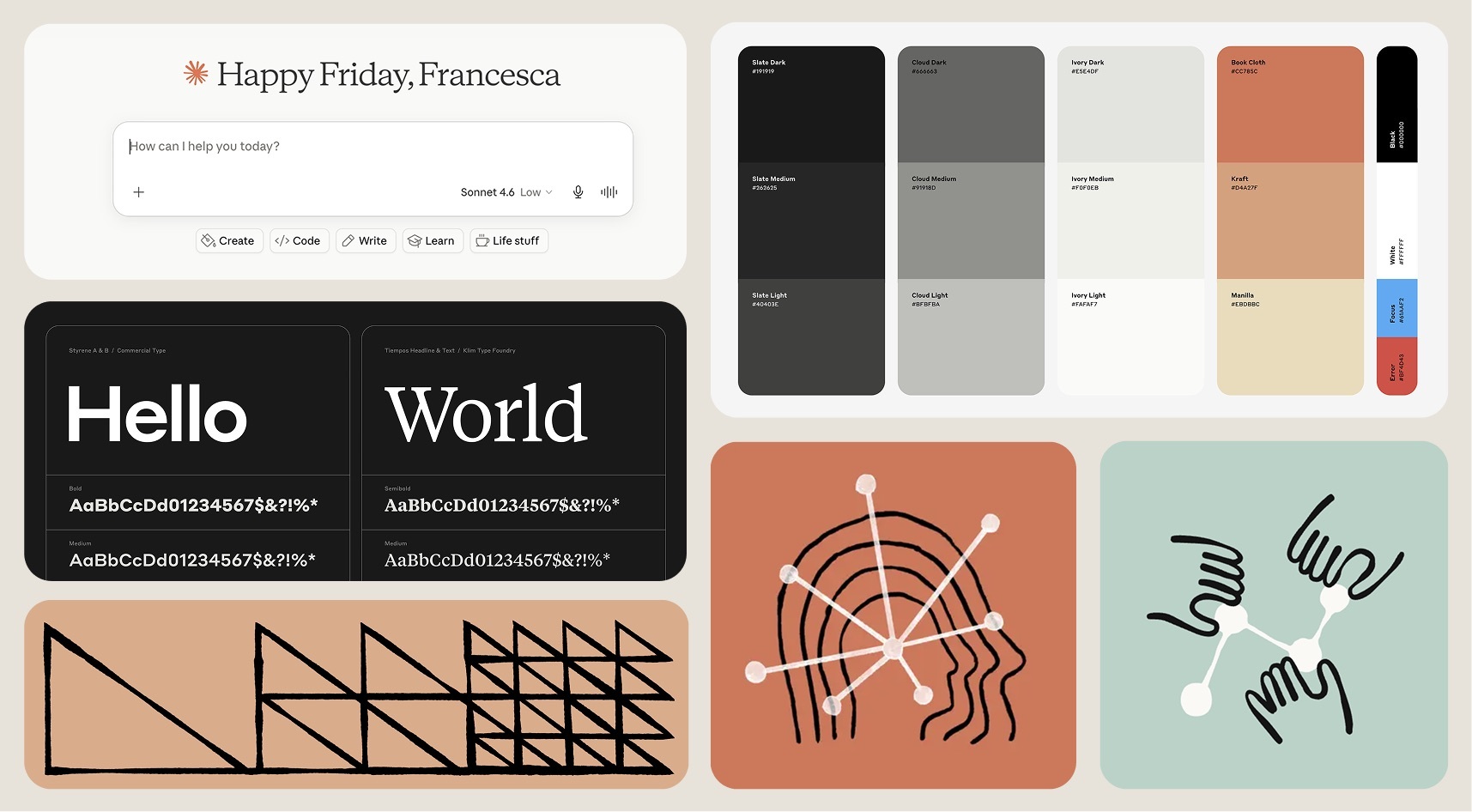
Claude's typography is the clearest example. Serif typefaces, editorial layouts and italic styling create a subtle but powerful shift in perception. It feels less like a machine processing information and more like a system interpreting it. Less like software, more like a trustworthy colleague.
That impression forms early. Before users read a sentence or understand the technology, they have already formed a view, and typography helps shape it. Traditional technology branding communicates precision. Claude's typography communicates reflection. One aesthetic says computation; the other says understanding. In a category competing on capability, that distinction is increasingly valuable.
How do you design a brand for trust in the age of AI?
Trust is no longer something a company can simply claim. It has to be designed. But there is no plug-and-play formula. The moves below only work when they are balanced against what a brand actually needs, and applied with intention.
1. Lead with clarity, not complexity
Most people no longer need convincing that AI is powerful. They are surrounded by proof. The job is to reduce friction and make the system feel understandable, not impressive.
2. Borrow from editorial and publishing
Serif type, editorial layouts and considered hierarchy carry centuries of credibility. They signal that a real person organized this information with care.
3. Choose warmth over spectacle
Warm palettes, illustration and human imagery reassure. Cold gradients and abstract systems impress, but reassurance is what uncertain users actually want.
4. Make human craft visible
Slight imperfection reads as authorship. When flawless, technical-looking design is the default, visible craft becomes the proof that someone made a decision.
5. Signal judgment, not just capability
Show that there are human values and intentions behind the product. The promise that matters now is good judgment, not raw horsepower.
6. Keep some imperfection
Hyper-uniform, over-polished design now reads as cold and impersonal. A little texture and irregularity signals a human hand.
7. Anchor in enduring values
Balance progress with the values people have trusted for generations: clarity, authorship, expertise, care and human judgment. Not because they are old, but because they endure.
Use these with intention, or you just build the next monoculture
These are not a checklist to apply mechanically. Used that way, they produce a new sameness, a wave of identical serif-and-cream brands that blur together exactly like the gradients did. The point is not to trade one formula for another. Serif type on a brand that should feel bold and fast is as wrong as a cold gradient on one that should feel human. Some of these moves will fit a given brand; others will not. Choose what serves the brand's real needs, and use it deliberately.
Will branding keep moving away from the hyper-tech look?
Probably, yes. For years, the most advanced companies tried to look the most advanced. That made sense when technological progress was the story. We are entering a different chapter.
As technical sophistication becomes something every brand can show, looking advanced alone means less. A polished, technological look is now the baseline. What becomes scarce is evidence of human intention: thoughtfulness, taste, judgment and care. The most distinctive AI brands are already moving this way themselves, trading cold gradients for serif type and editorial warmth.
The brands that stand out over the next decade may not look the most technological. They may be the ones that make technology feel understandable, approachable and trustworthy. Perhaps that is why editorial typography is returning. Perhaps that is why Anthropic feels distinctive. The future of branding may look less like a machine and more like a person, not because we are moving backwards, but because humanity has become one of the most valuable signals a brand can send.
If you are weighing a rebrand or a new identity and want a partner who will tell you when serif is the wrong answer, see how we work with brand strategy and brand identity.
Summary
The visual language of technology has flipped. For a decade, looking futuristic was proof of value. Today that look is the category default. When everything looks advanced, advanced stops meaning anything.
What becomes scarce is trust. Consumer confidence in AI is fracturing, and uncertain people look for reassurance rather than novelty. So branding's job has changed. It is no longer about proving capability. It is about signaling judgment, authorship and human care through warm color, editorial design and serif type. This is true for every brand now, not only the ones building AI.
The important word is not serifs or history. It is craft. The brands that feel right in this era will embrace the future while staying anchored to the values people have trusted for generations. Not because those values are old, but because they are enduring.
Serif typefaces carry centuries of association with books, journals and academic publishing. When technical, polished design is everywhere, they signal authorship, care and credibility, the qualities a brand needs to communicate trust.
The hyper-tech aesthetic is the familiar look of gradients, dark interfaces, glowing UI and geometric sans-serif type. It once signaled innovation. AI companies adopted it almost universally, so it now signals sameness rather than difference, which is why many of them, including Anthropic, are moving toward serif type and editorial warmth instead.
Anthropic draws on editorial design: warm colors, illustration and serif typography. The result reads like an institution of knowledge rather than a software company, signaling judgment over raw capability.
No. It means balancing progress with reassurance. The strongest brands embrace new technology while staying connected to enduring values like clarity, authorship and care.
No. Type designers describe it as necessity, not nostalgia. The over-uniform hyper-tech look has created visual fatigue, and grounded, slightly imperfect serifs feel warm and human by contrast.
No. AI companies show the shift most clearly, but the lesson is broader. As technology shapes how people perceive every brand, the human touch is what sets one apart, so every brand needs human signals.
Evidence of human intention. Craft, considered typography, warmth and slight imperfection all show that a person cared and made a decision, which a generic, templated look does not convey.


