Brand strategy
Brand strategy that answers why anyone should care
Brand strategy is the work of deciding who you are, what you stand for, and why anyone should care. Get this right and every design decision gets easier.
By Rebecca Busk, CEO & Partner
Last updated: June 2026
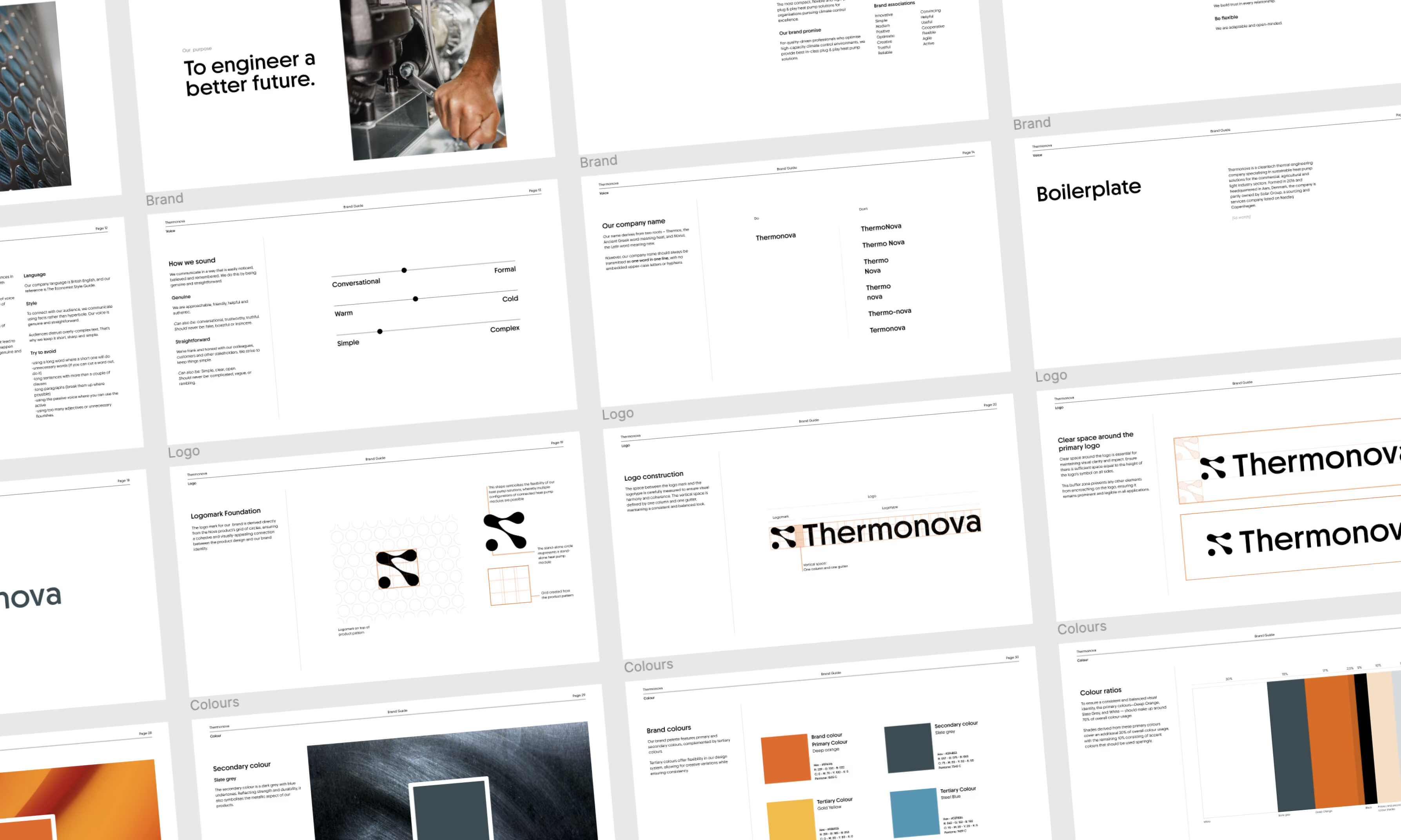
Good brand strategy means every decision downstream gets easier, from the logo to the landing page.
We settle positioning, messaging and, when it's needed, the name, before anyone opens a design tool.
We do it in workshops with the people who run the company, so the strategy is yours and not a deck we hand over.
What is brand strategy?
Brand strategy is the foundation your brand is built on. It defines who you are, who you are for, what you stand for, and why anyone should choose you over the alternatives. It covers positioning, your core messages, your tone, and sometimes your name.
It is the part most companies skip, because it doesn't look like anything yet. Then every design decision turns into a debate, because nobody agreed on what the brand is supposed to say.
Done well, strategy makes the rest fast. The identity has a brief, the website has a story, and your team can answer "why us" the same way every time.
Who is this for?
Companies about to invest in a brand or a website that want the thinking done first, and companies where the brand no longer says what the business does. You'll recognize at least one of these.
- 01Nobody can explain what you do in one sentenceSales says one thing, the website another, and the founders a third. Prospects fill in the gap themselves.
- 02You compete on price because you can't compete on differenceWhen your positioning is the same as everyone else's, the only thing left to talk about is the number.
- 03You're about to rebrand or rebuild the websiteStarting design without a strategy means designing twice. Settle the story first.
- 04You've grown into a company the brand doesn't describeNew products, new markets or a new ambition, and the brand still tells the story from three years ago.
If two of these sound familiar, a positioning workshop is where we'd start. It usually takes a day, and it settles more than most companies expect.
Strategy first or design first?
Design first | Strategy first |
|---|---|
Starts with a logo and a mood board, and hopes the meaning follows. | Starts with who you are for and why you win, then designs to say it. |
Every review becomes a taste debate, because there is no brief to judge against. | Every review checks one thing. Does this say what we agreed? |
Looks new for a year, then drifts as the company changes. | Holds up as you grow, because the identity is built on a position rather than a trend. |
Design without strategy is decoration. It might look great, and nobody will know what it means. We do the thinking first, so the design has something to say.

What's included in brand strategy
The decisions everything else is built on
- PositioningWho you are for, what you stand for, and why you win against the alternatives, written down and agreed.
- MessagingYour core story, key messages and tone of voice, so everyone from sales to social says the same thing.
- NamingA new name, or a clear decision to keep the one you have, with the checks done before anyone falls in love with it.
- WorkshopsFacilitated sessions with your leadership team, so the strategy is decided by the people who have to live with it.
- Brand platformOne document that holds the position, the story and the rules, ready to brief designers, writers and new hires.
How we work
Four steps, no mystery
- 01DiscoverWe learn the business, the market and the customers, and find the gap between how you're seen and how you need to be seen.
- 02WorkshopPositioning, audience and story, worked out in the room with your leadership team rather than delivered from ours.
- 03Write it downPositioning, messaging and, if needed, the name, tested against real situations like a sales call and a homepage.
- 04Brief the workWe hand over a brand platform your team and any designer can build on, or carry it straight into identity and web.
80%
trust the brands they use
Edelman, 2025
73%
trust grows with cultural relevance
Edelman, 2025
4.85×
brand distinction from creator-led content
Kantar, 2025
Questions
Brand strategy is the set of decisions that define who your company is, who it is for, what it stands for, and why anyone should choose it. It covers positioning, messaging, tone of voice and sometimes naming. Everything visual, from the logo to the website, is built on top of it.
Strategy is what you stand for. Identity is how it looks and sounds. Strategy decides positioning, messaging and story. Identity turns that into logo, visual system and guidelines. You need both, and strategy comes first, because the identity needs something to express. See what goes into a brand identity.
Yes, if you want to build the site once. A website is where your positioning is seen most, so building it before the story is settled means rebuilding it when the story changes. A short strategy phase up front makes the web project faster, because every page has a brief. For the website itself, start with digital strategy.
Typically four to six weeks from kickoff to a finished brand platform, with one or two workshops in the middle. Naming adds time for checks and trademark searches. We scope it after the first call, so you know the timeline before we start.
We put the leadership team in a room and work through the hard questions. Who are we really for? What do we believe that competitors don't? What would we never do? The output is decisions, not sticky notes, and we write them up the same week so nothing gets lost.
Yes, when the current name holds you back, or a merger or a new market forces the question. It runs as its own track with checks for meaning, domain and trademark. Most brand strategy projects keep the name, and we'll tell you honestly if yours should.
Only if it is concrete, which is why we write it as decisions and examples rather than values on a poster. The brand platform shows how to say it on the homepage, in a sales deck and in a job ad, so your team has something to copy from on day one.
Yes, and most clients do. The same team takes the strategy into the visual identity and the website, so nothing gets lost in translation between agencies. If you already have designers, we brief them with the brand platform and stay available for reviews. Read about our Webflow development.
Think WE MIGHT
BE A FIT?
BE A FIT?
Or tell us what you're building, and we'll tell you honestly if we're the right team for it.
Let's talk