Web development for teams who want a site that performs
What is web development?
Web development is the building of a website: its structure, code, content management, performance, and the system your team uses to update it. It spans everything from a simple marketing site to a complex, integrated platform.
The aim is a site that stays fast, stays editable, and keeps working as you grow, rather than one that only looks right on launch day. Modern web development increasingly happens on visual platforms rather than fully hand-coded stacks, because they give teams more control with less maintenance.
Which approach fits you depends on what your site actually needs to do.
Who is this for?
- 01Generate leadsPages built around what visitors came for, forms that convert, and tracking that tells you what worked.
- 02Tell the brand storyA build that carries the identity faithfully, with room for the content and motion the brand actually needs.
- 03Let marketing run it without waiting on developersReusable components, a CMS your team understands, and training so publishing a page takes minutes.
- 04Scale across markets and productsLocalization, CMS structure and integrations built in from the start, so growth doesn't mean a rebuild.
If your site is really a complex web application with heavy custom logic, or a large store built on deep e-commerce features, we'll tell you honestly, and point you the right way even if it isn't us.
Which platform should you build your website on?
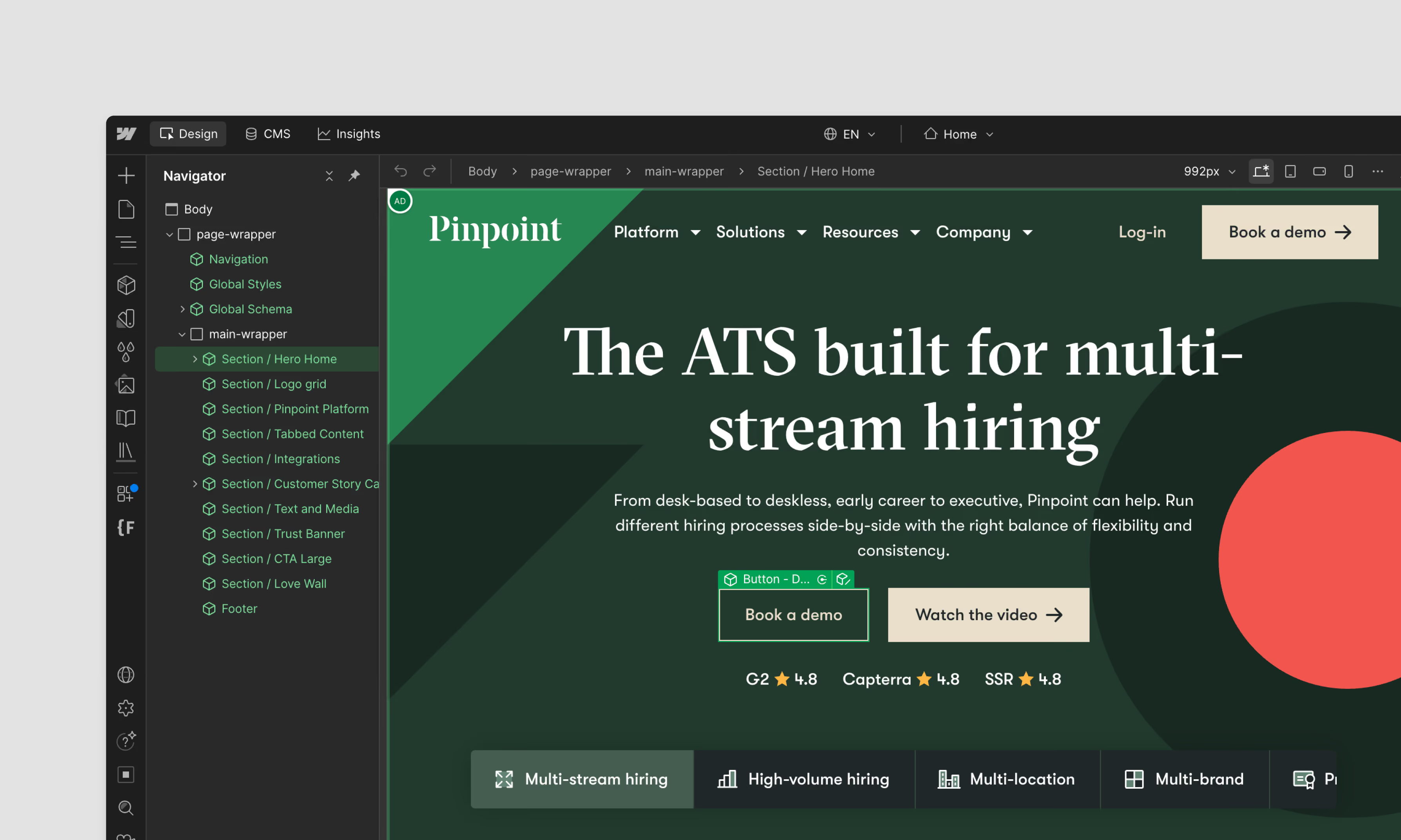
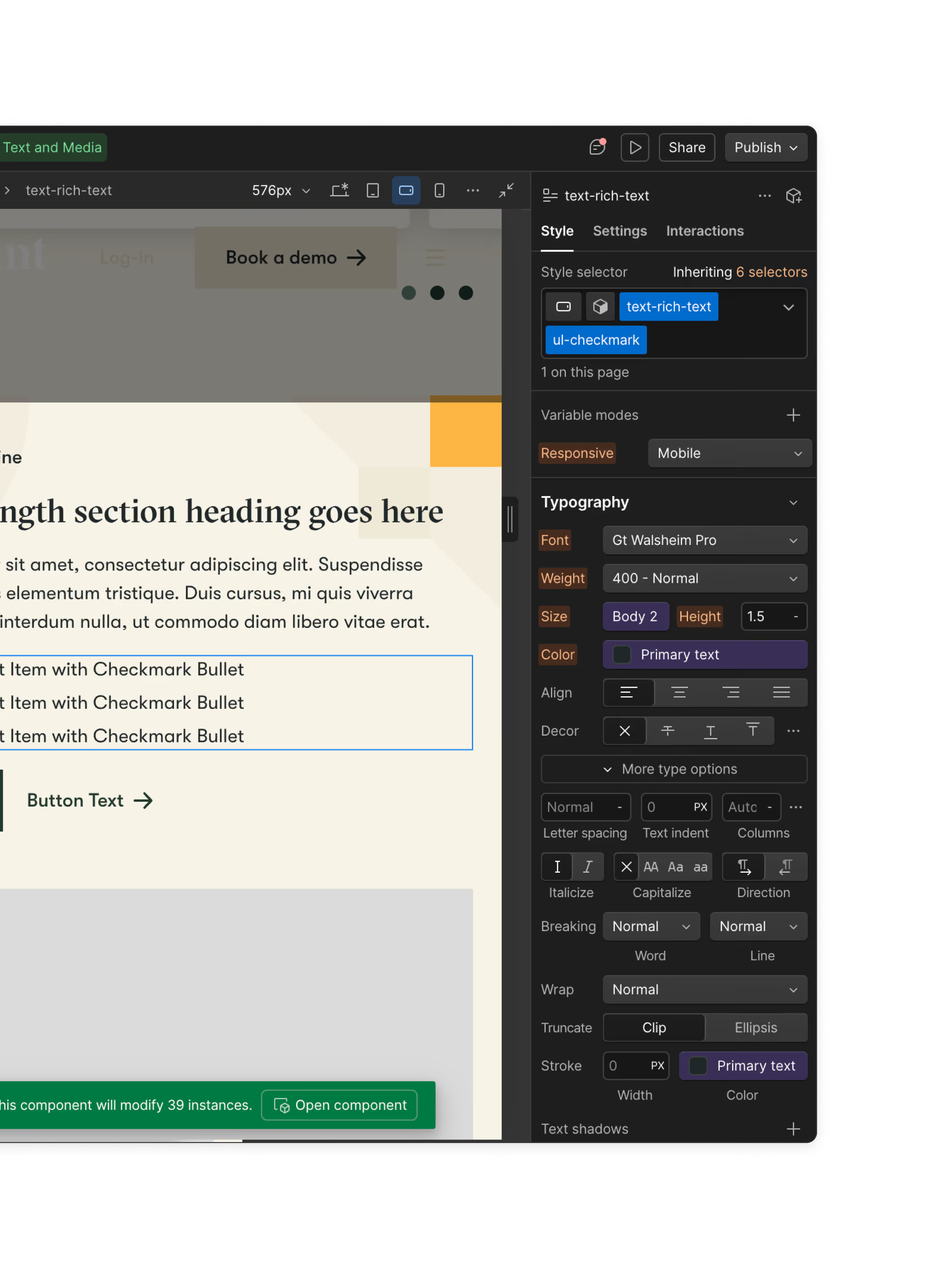
- WebflowIt suits marketing-led teams who want design freedom, speed, and a site they can run without developers. It's what we recommend for most of the companies we work with, and what we're recognized for.
- WordPressSuits teams that depend on a specific plugin ecosystem or run large, complex e-commerce.
- Custom DevelopmentSuits sites that are really applications, with logic or integrations no platform covers.

Why we recommend Webflow
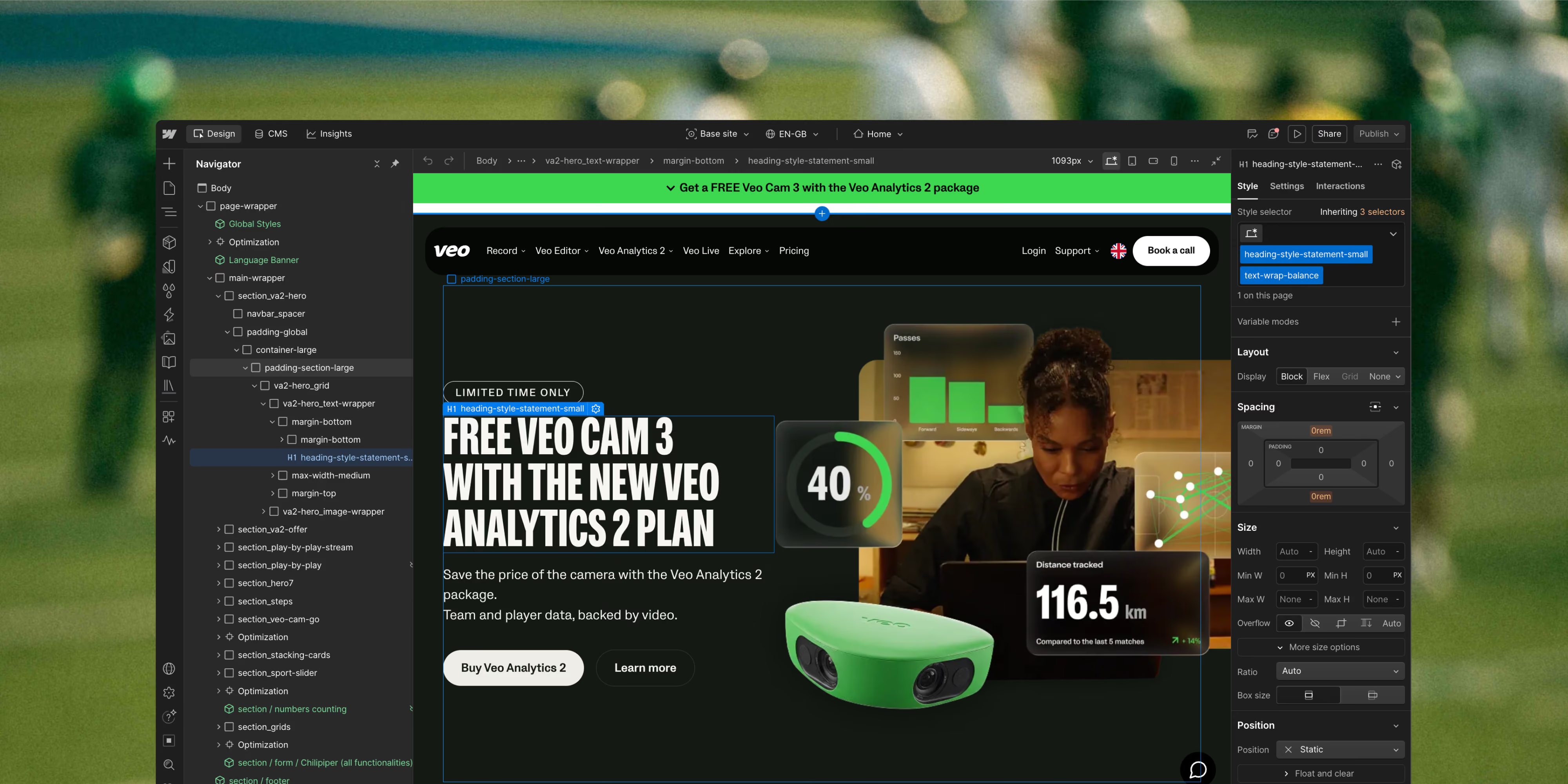
For most marketing-led websites, Webflow gives the best balance of design, speed, and control.
It's why we build most projects on it, and why Webflow named us Professional Partner of the Year. When a different platform genuinely fits you better, we'll tell you. The recommendation follows your needs, not our preference.
- Your team edits pages and ships campaigns without a developer
- Performance is fast by default
- Hosting and security are handled
- There's no plugin stack to patch and no server to babysit
Four steps, no mystery
- 01DiscoverWe learn your business and goals, and recommend the right platform for where you're going.
- 02DesignBrand, UX, and visual design, shown in context so what you approve is what you get.
- 03BuildA clean, scalable site, fast, accessible, and ready for your team to extend.
- 04Launch and growWe launch, train your team, and stay on for the next phases, so the site keeps improving instead of aging.
Web development is building and maintaining a website, including its structure, code, content system, and performance. It ranges from simple marketing sites to complex, integrated platforms. Good web development produces a site that's fast, easy to update, and built to grow.
It depends on who runs the site and what it needs to do. Webflow suits marketing-led teams who want design freedom and control without developers. WordPress suits plugin-heavy or large e-commerce sites. Custom development suits sites that are really applications. We recommend based on your needs, not a default.
Compare Webflow and HubSpot side by side.No. Choosing the right platform is part of what we do. Tell us what the site needs to achieve and we'll recommend the best fit, and explain why.
Yes. We'll turn an existing design from your team or another studio into a clean, scalable build, or hand off our design for your developers to implement.
Yes. We offer optional ongoing support and growth work, so you have a partner on call for changes and new phases rather than needing a full-time hire.
might be a fit
We'll give you a straight answer, even if it's not us.