Pinpoint's best hire yet
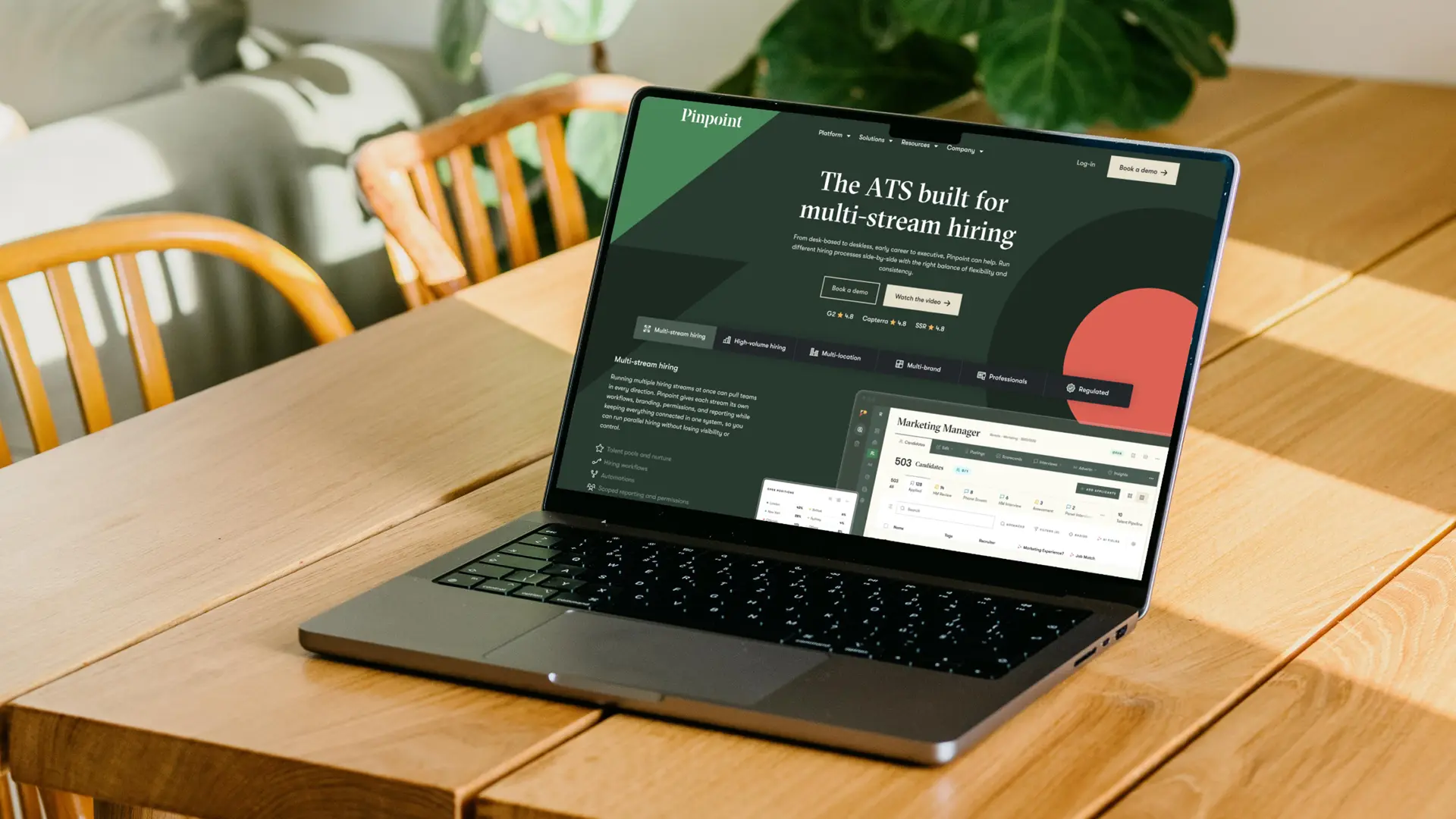
Their marketing team needed a website that could keep up. Every new page was a small project, the design couldn't flex, and the platform wasn't ready for where Pinpoint was heading, with AI, MCP and stricter security on the agenda. They needed a site the team could assemble themselves, without giving up speed or a great experience.
- Rebecca Busk
- Patrick Aurbo
- Riziki Nielsen
- Anja Johansen
- Ana Carolina Rijo
Their marketing team needed more design freedom and a component system they could build pages with themselves. They also wanted a platform ready for AI workflows and MCP, with hosting and security handled for them.
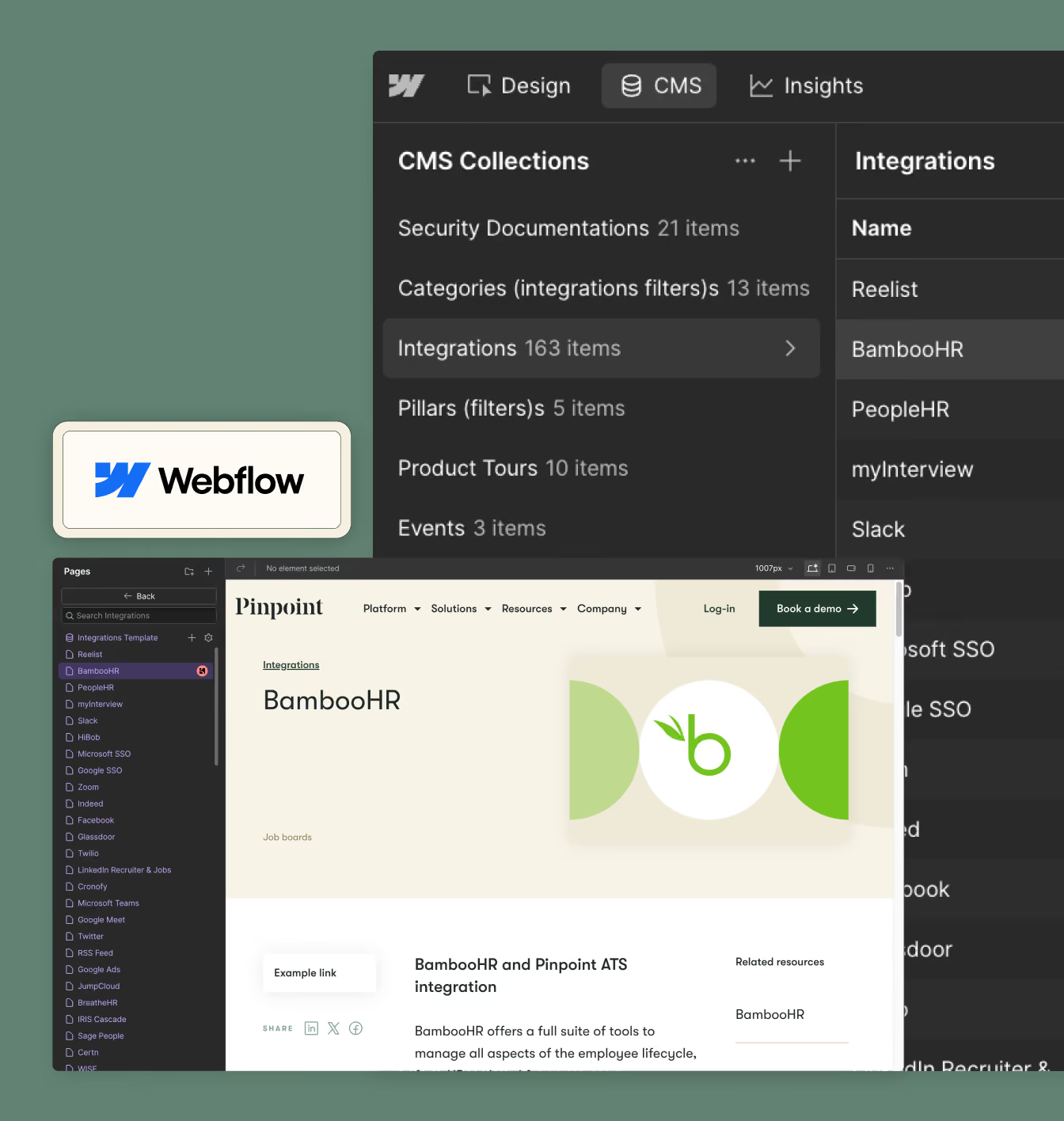
Kvalifik did the Webflow development. We gave feedback on wireframes and user experience while Pinpoint's design agency created the brand and UI. Then we built the 120-page site, the component library and the CMS, and handled the content upload, redirects and SEO setup.
By working as one team. Pinpoint, their design agency and Kvalifik met in a daily standup, design and development overlapped, and we built the site from reusable components instead of designing every page from scratch.
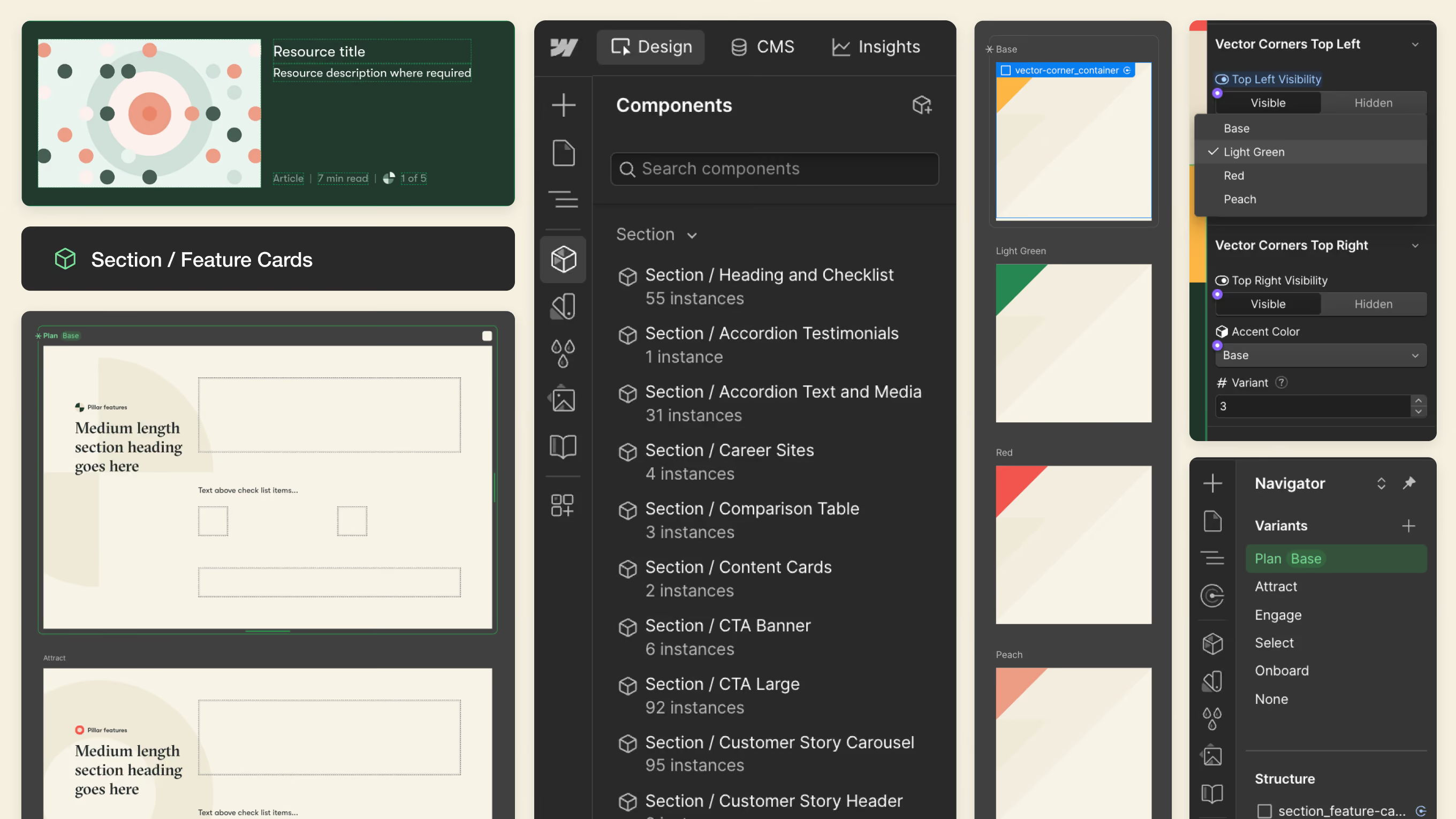
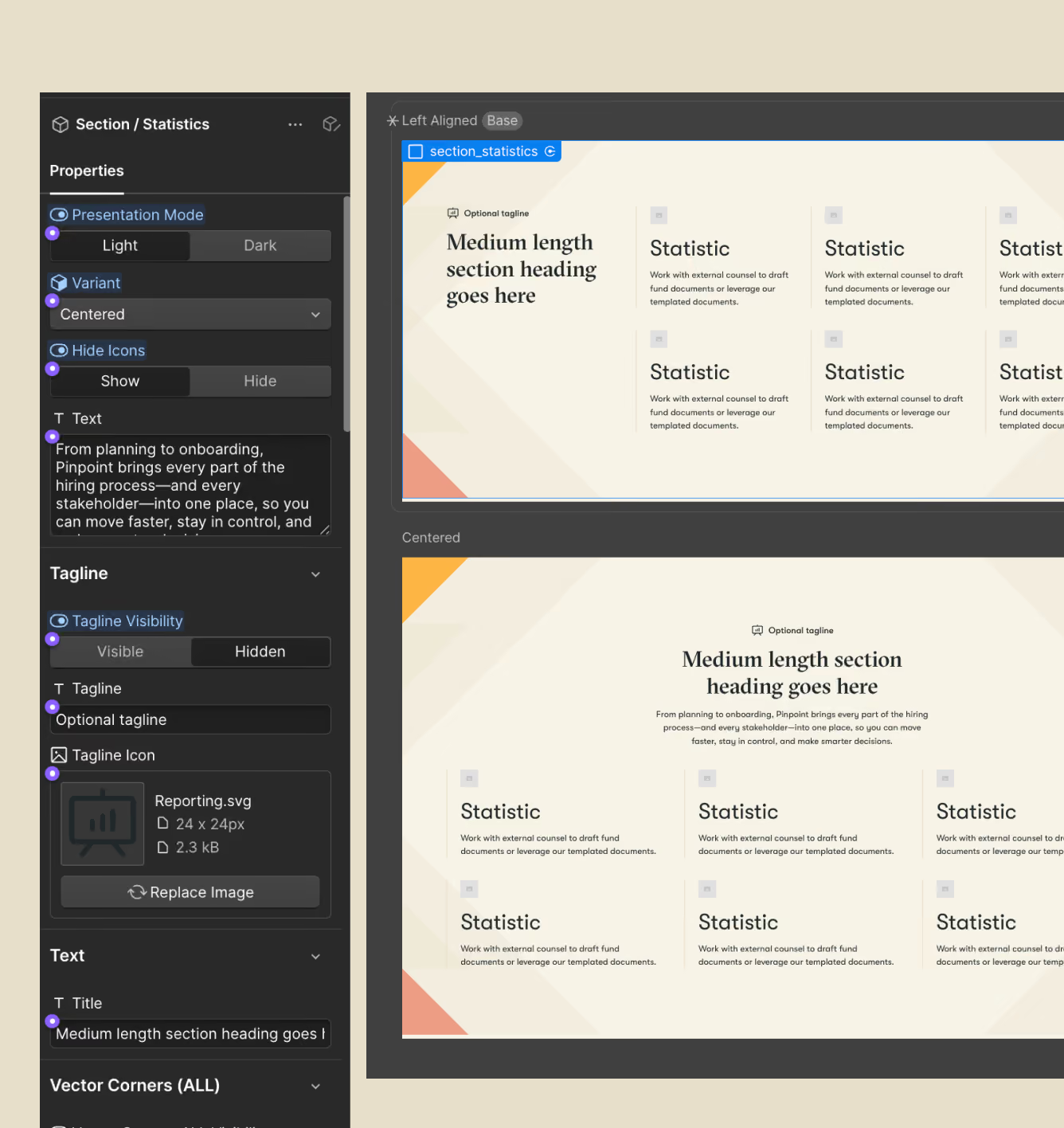
Yes. The site is built from 109 components and a set of templates, so the team can put together new pages and landing pages in Webflow themselves.

A WordPress site that slowed the team down
Pinpoint's WordPress site no longer matched the way their marketing team works. Design changes were hard to make, there was no real component system to build pages from, and every new template meant waiting for a developer.
The platform also had to be ready for what comes next. Pinpoint builds AI into its own product and wanted a website that works with AI tools and MCP, stays secure without constant plugin updates, and can grow without piling up backend maintenance.
Performance mattered just as much. The website is where Pinpoint wins new leads, so it had to be fast, and the experience had to feel as considered as the brand.
A component-based Webflow platform the team can build with
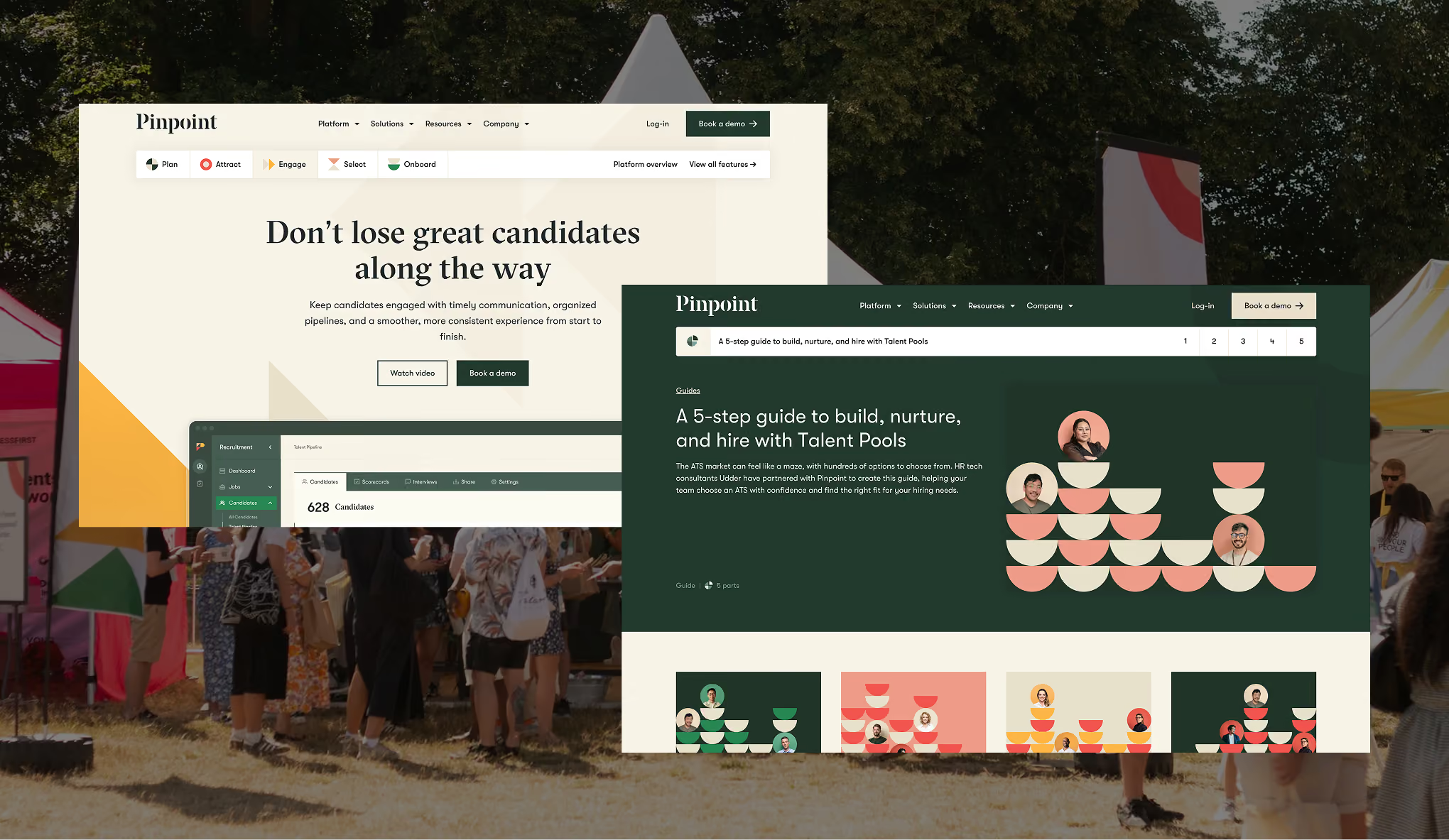
Pinpoint's design agency created the brand and UI in Figma. We joined at the wireframe stage and gave feedback on what would work well in the browser and for the user. That covered responsive behavior, functionality and the flow through each page. The agency then applied the brand to the final UI.
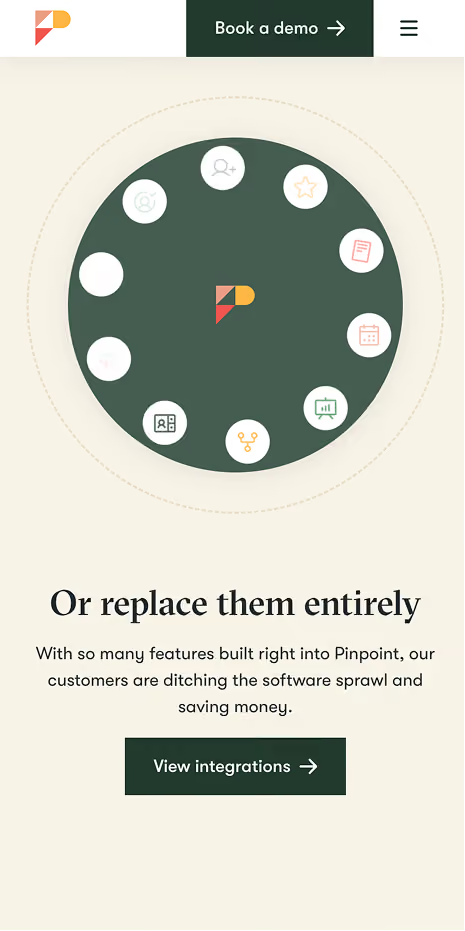
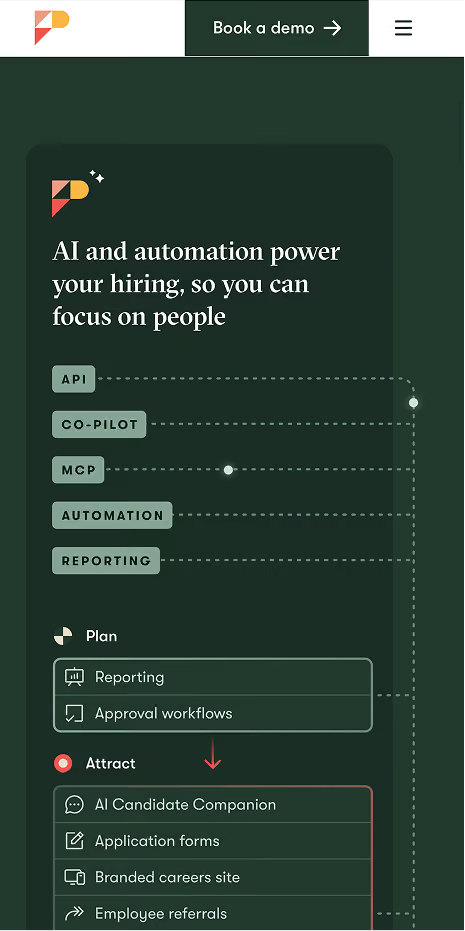
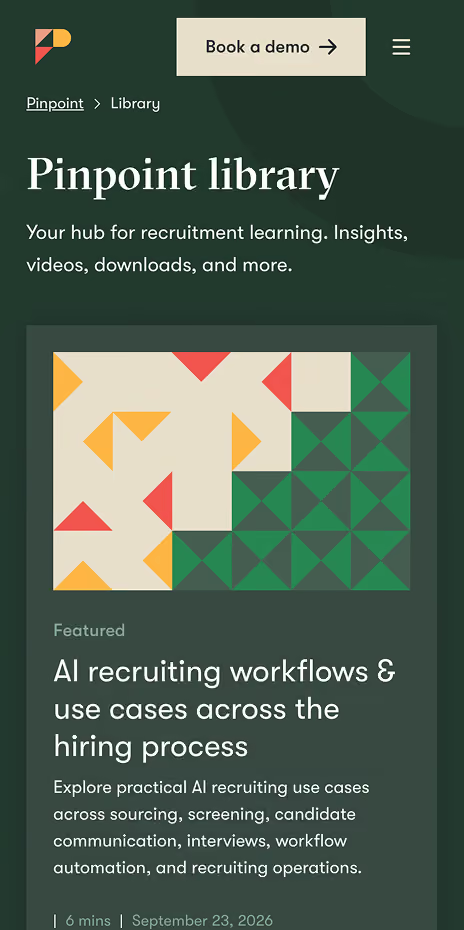
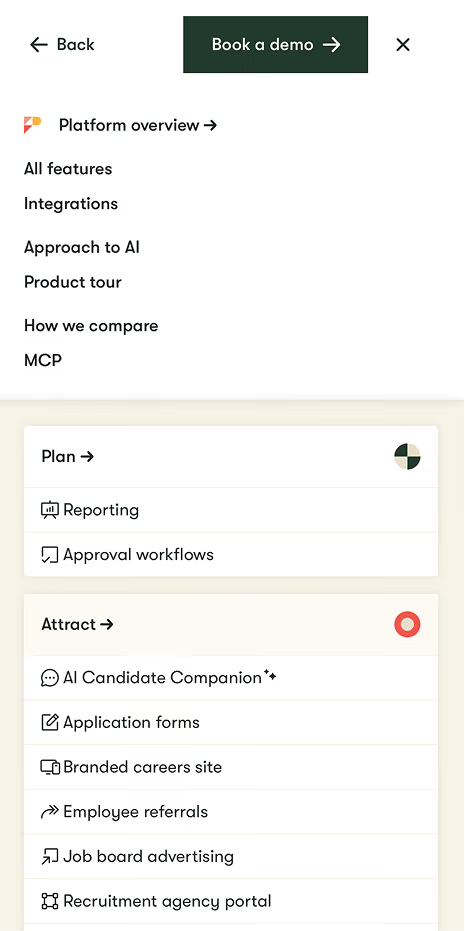
From there we built the site in Webflow from the ground up. A library of 109 components and a set of templates lets the marketing team put together new pages without a developer. The CMS holds 300 collection pages, with room for many more.
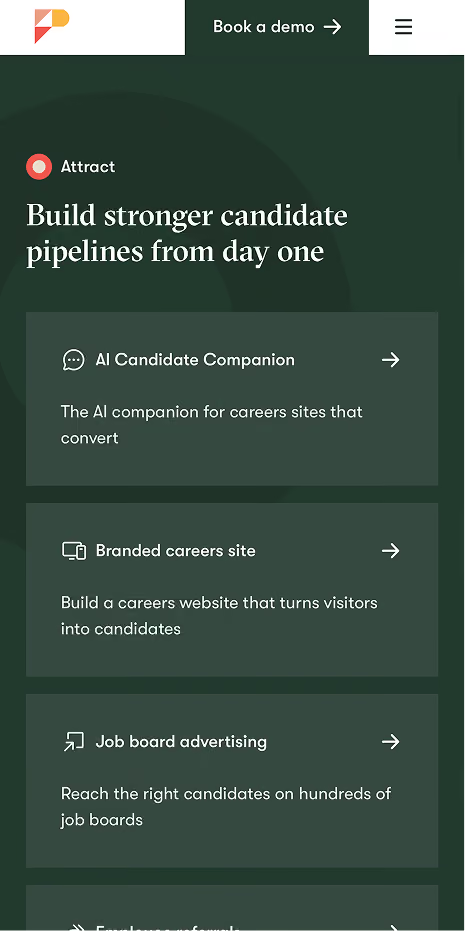
We kept the user journey in focus on every page, so the path from first visit to getting in touch is easy to follow. Custom animations bring the product to life along the way and draw attention to what matters, and they're built to keep the site fast.
Most of the content was rewritten for the new site. We uploaded everything, mapped redirects from the old URLs and carried the SEO setup across to protect the search visibility Pinpoint had built up.
One daily standup across three teams
Eight weeks from finished design to launch leaves no room for long handovers. Pinpoint, their design agency Kohde and Kvalifik met every day with all the relevant stakeholders, so questions were answered the same day and decisions didn't wait for the next meeting.
Design and development ran side by side. When something in the design needed adjusting for the browser, we raised it early and solved it together, instead of finding it at the end.
A website Pinpoint's team can run themselves
Pinpoint launched a 120-page site eight weeks after the design was ready. The marketing team now builds and updates pages from a shared component library, without waiting for a developer.
Webflow takes care of hosting and security, so there are no plugins to patch or servers to maintain. The site also runs on a platform with its own MCP server, ready for the AI workflows Pinpoint is moving towards.
See other cases