Turning innovative energy infrastructure into interaction
Case summary
- Søren Højland Boesen (Former Employee)
- Anja Johansen
- Nicolai Hemdrup (Former Employee)
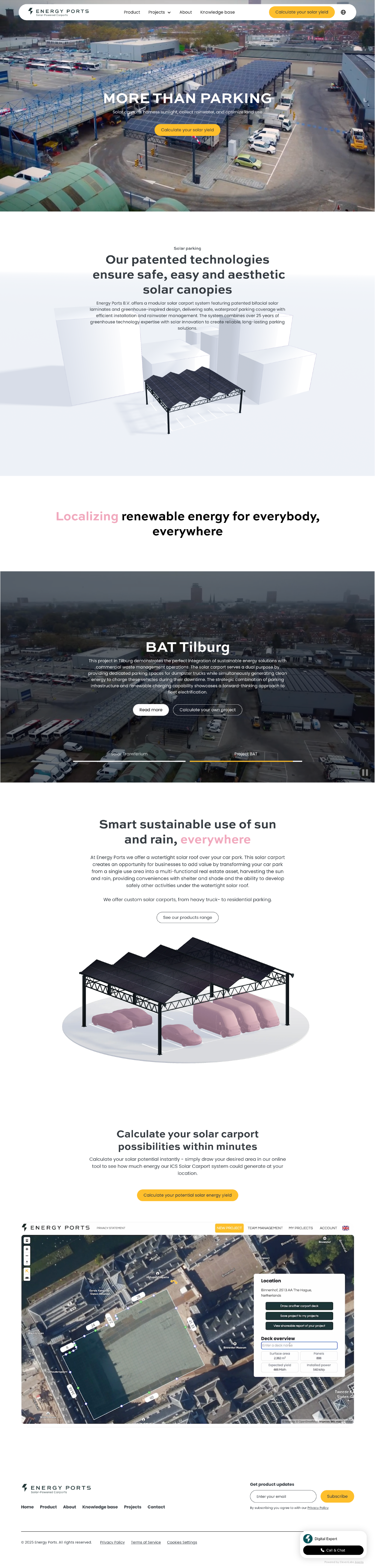
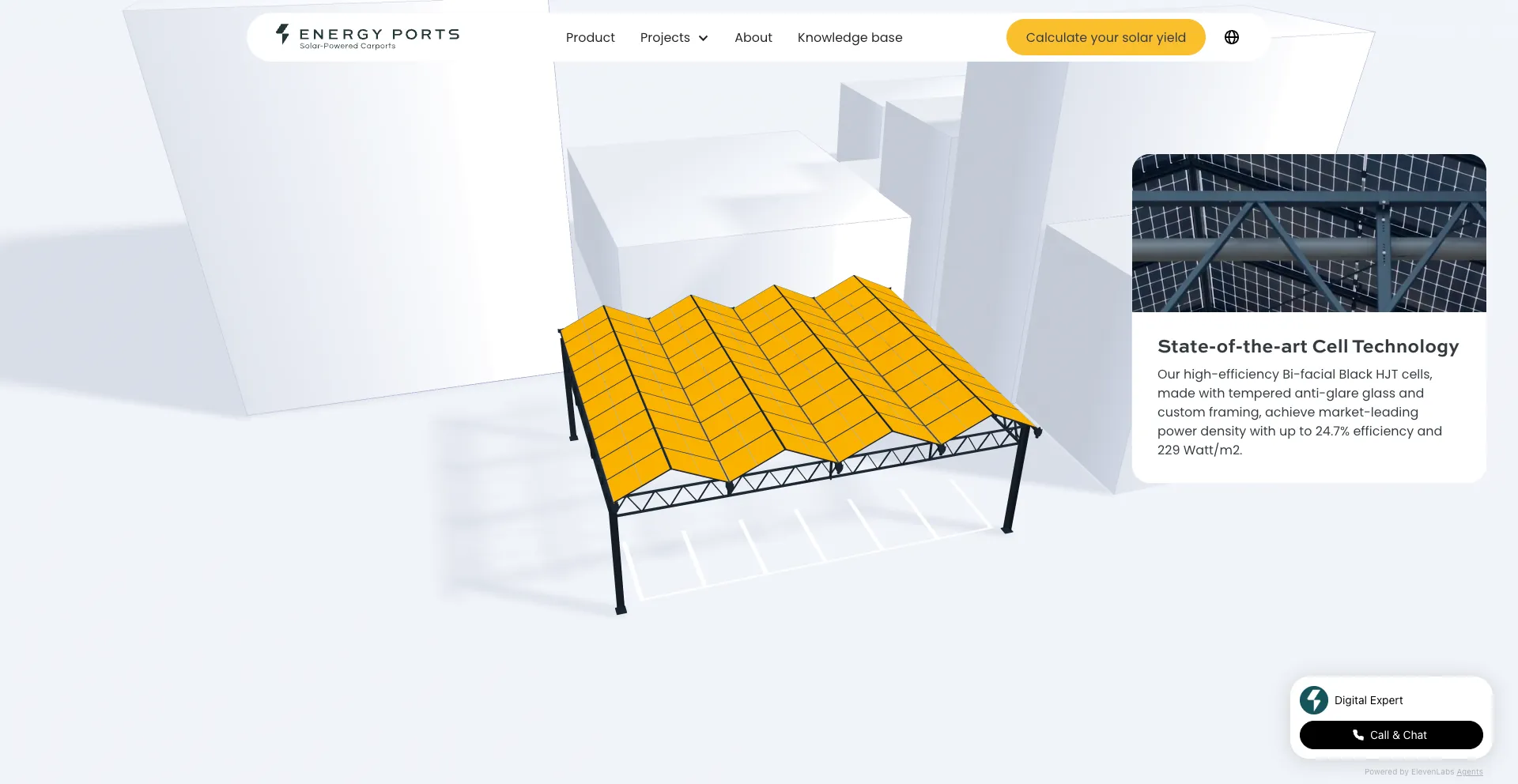
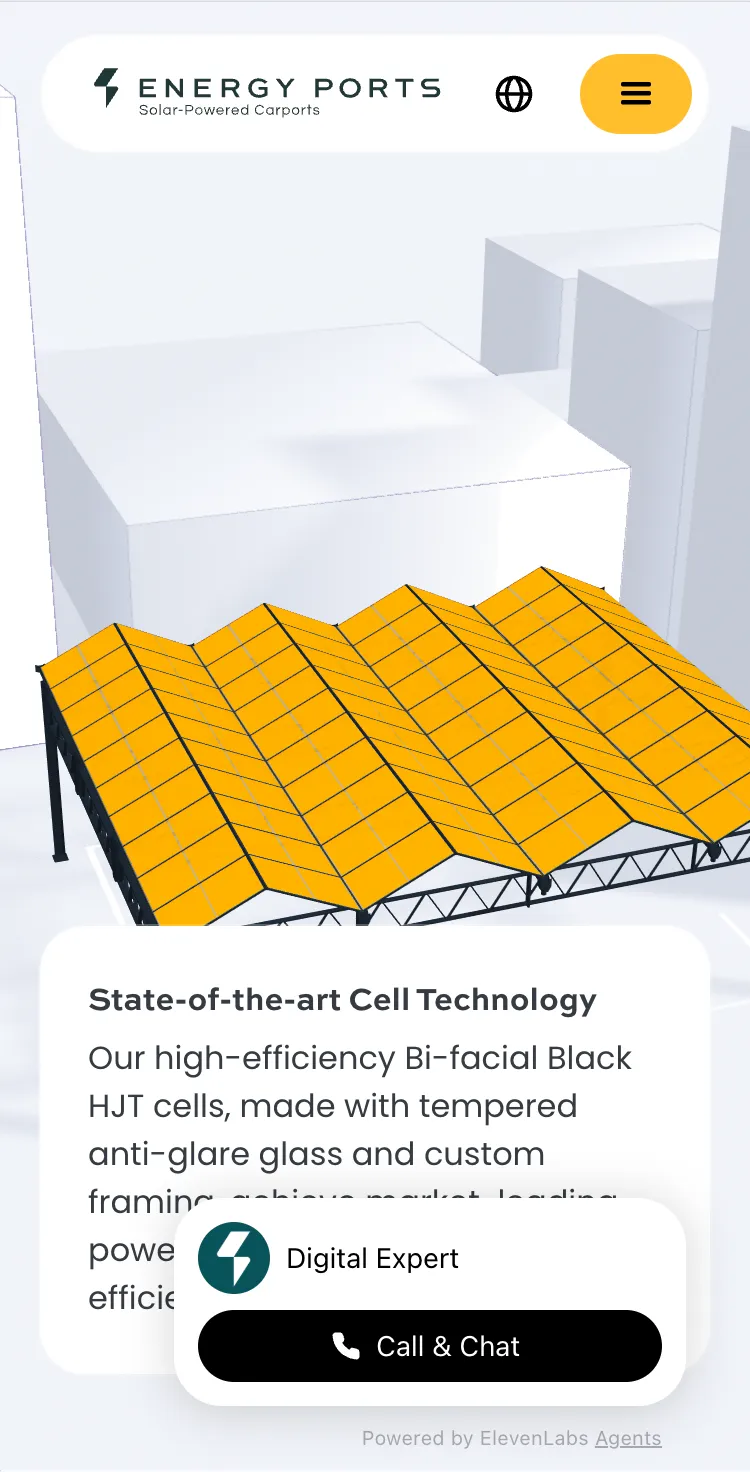
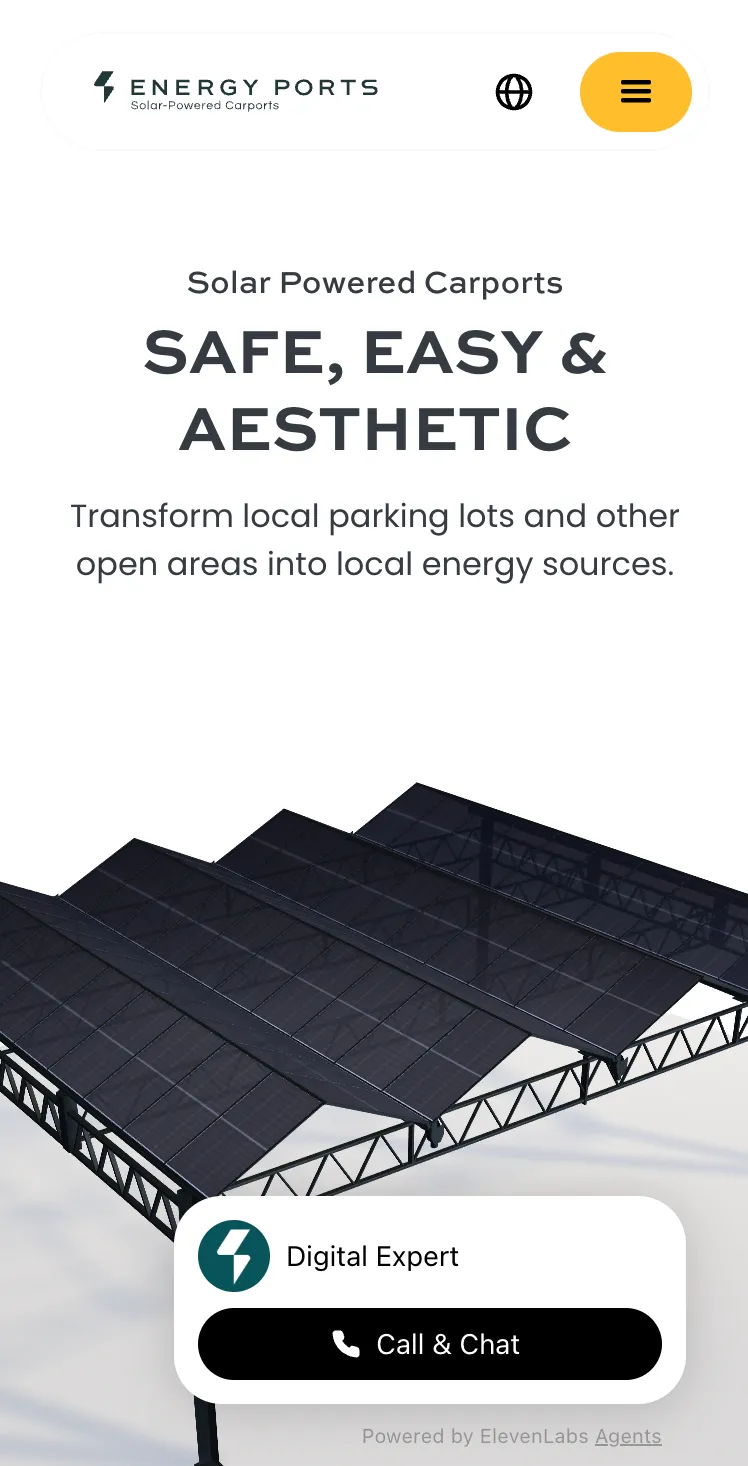
Because 3D explains the product in a way static images can't. Energy Ports' modular solar carports come in multiple configurations and components, so we used 3D scrollytelling to highlight key features and embedded an interactive 3D model visitors can explore. Technical evaluators and decision-makers both get a clear picture of how the construction works.
By splitting the work pragmatically. Energy Ports' in-house designer drafted the wireframes, and we refined them into the final UI design. That let us put the budget where it created the most value, building the 3D experiences that explain the solar carports. Energy Ports kept its ambition and stayed within a constrained budget.
We turned Energy Ports' own CAD into interactive scenes. The work covered conceptualizing the 3D visualizations, converting the CAD into a usable format, drawing the scenes in 3D with Spline and connecting them to the interactions on the website. Everything was also made to work on mobile, so visitors can explore the solar carports on a phone too.
Yes. The Energy Ports website runs on Webflow with a scalable CMS setup that gives the team full editorial control and easy content management. The setup also provides strong performance and SEO foundations, so the site can keep supporting a more mature sales dialogue as Energy Ports moves from startup to scale-up.

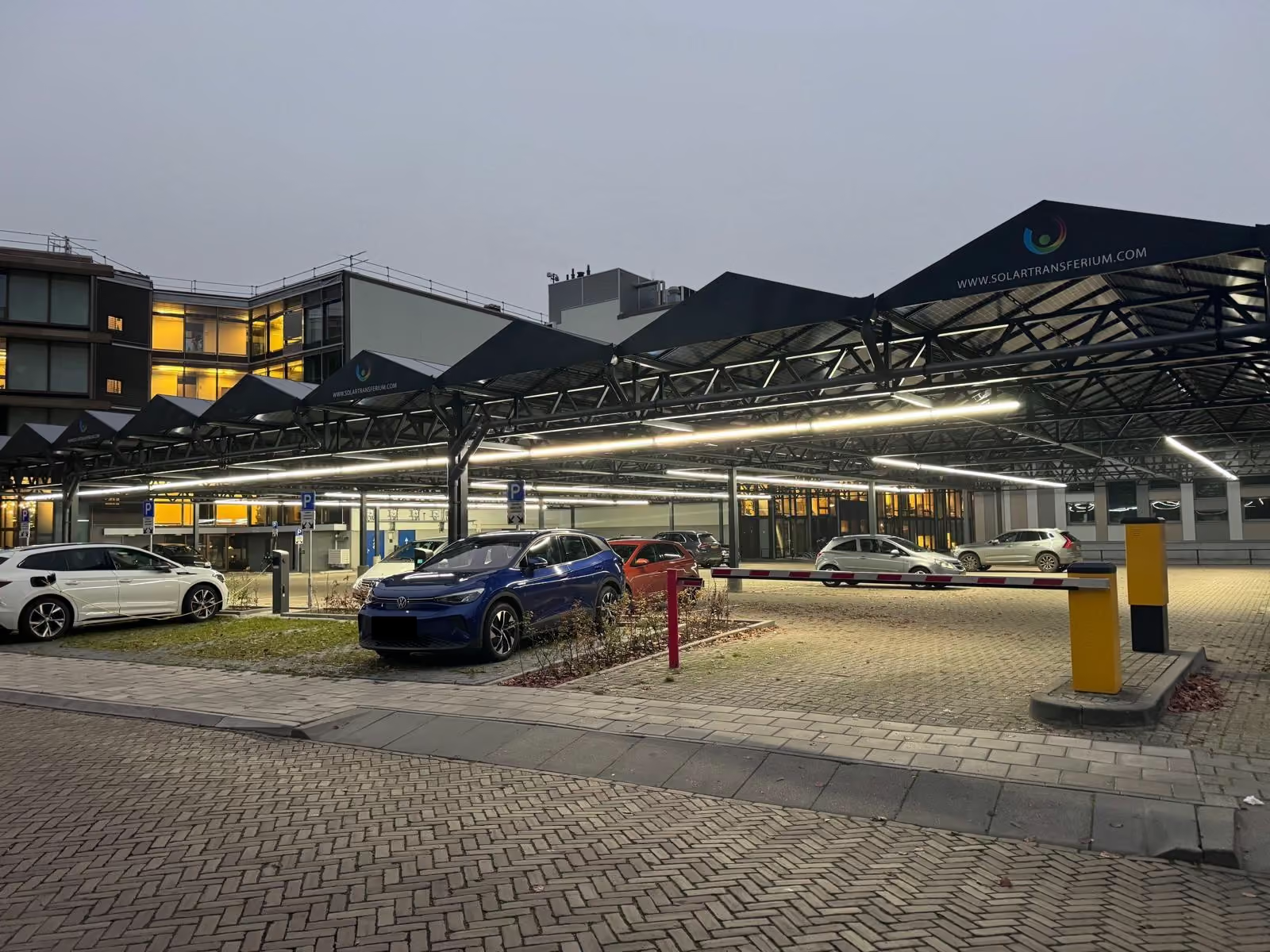
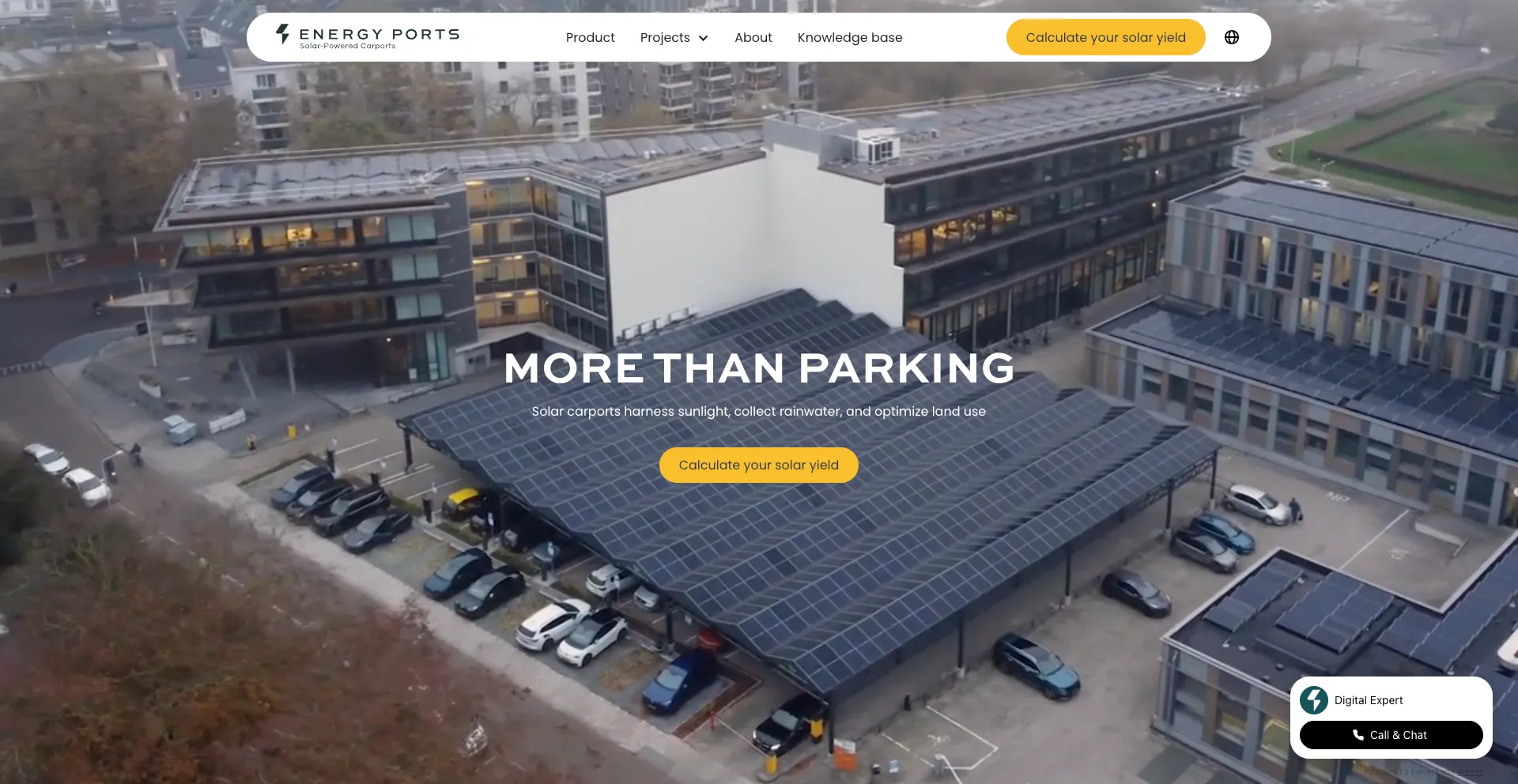
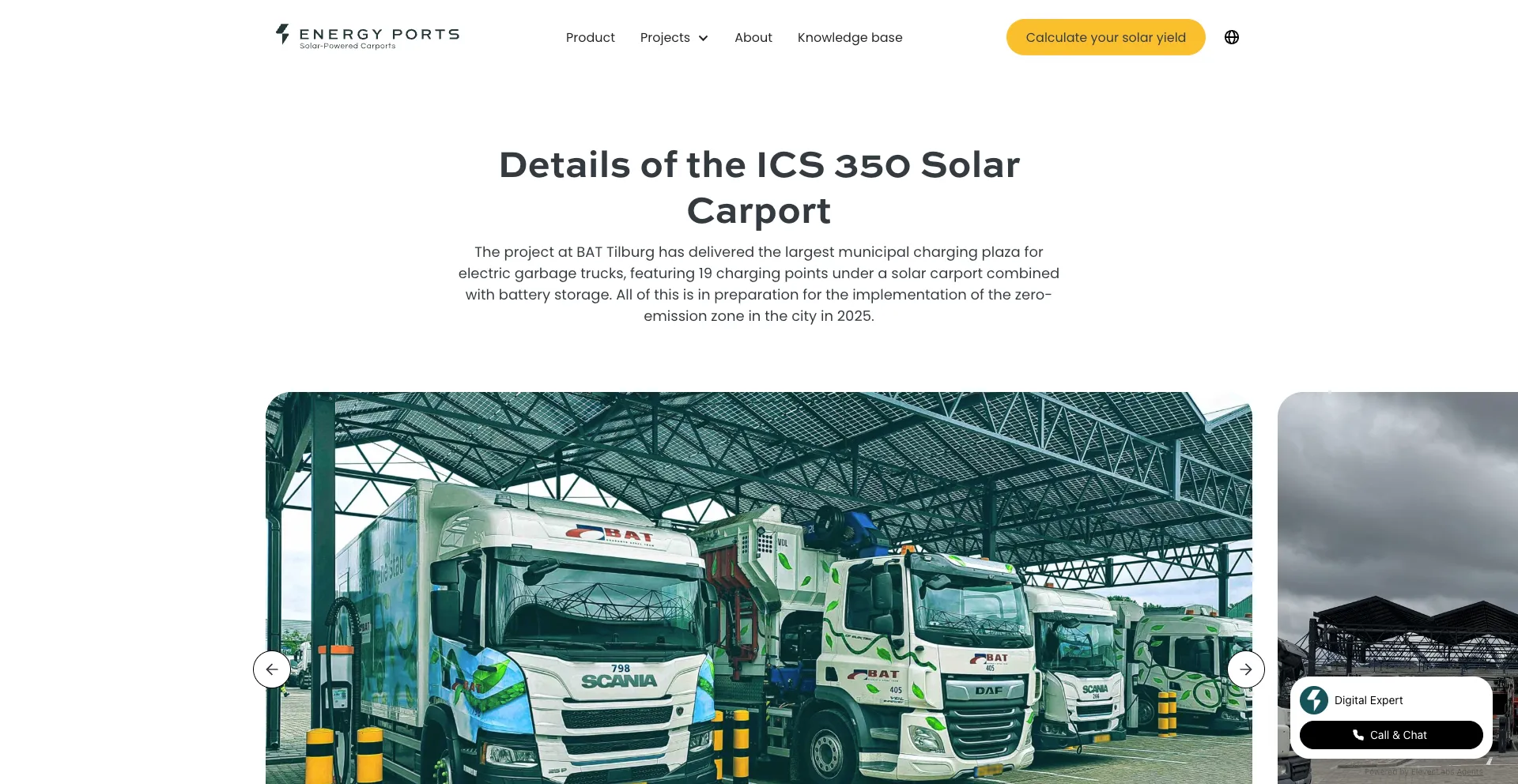
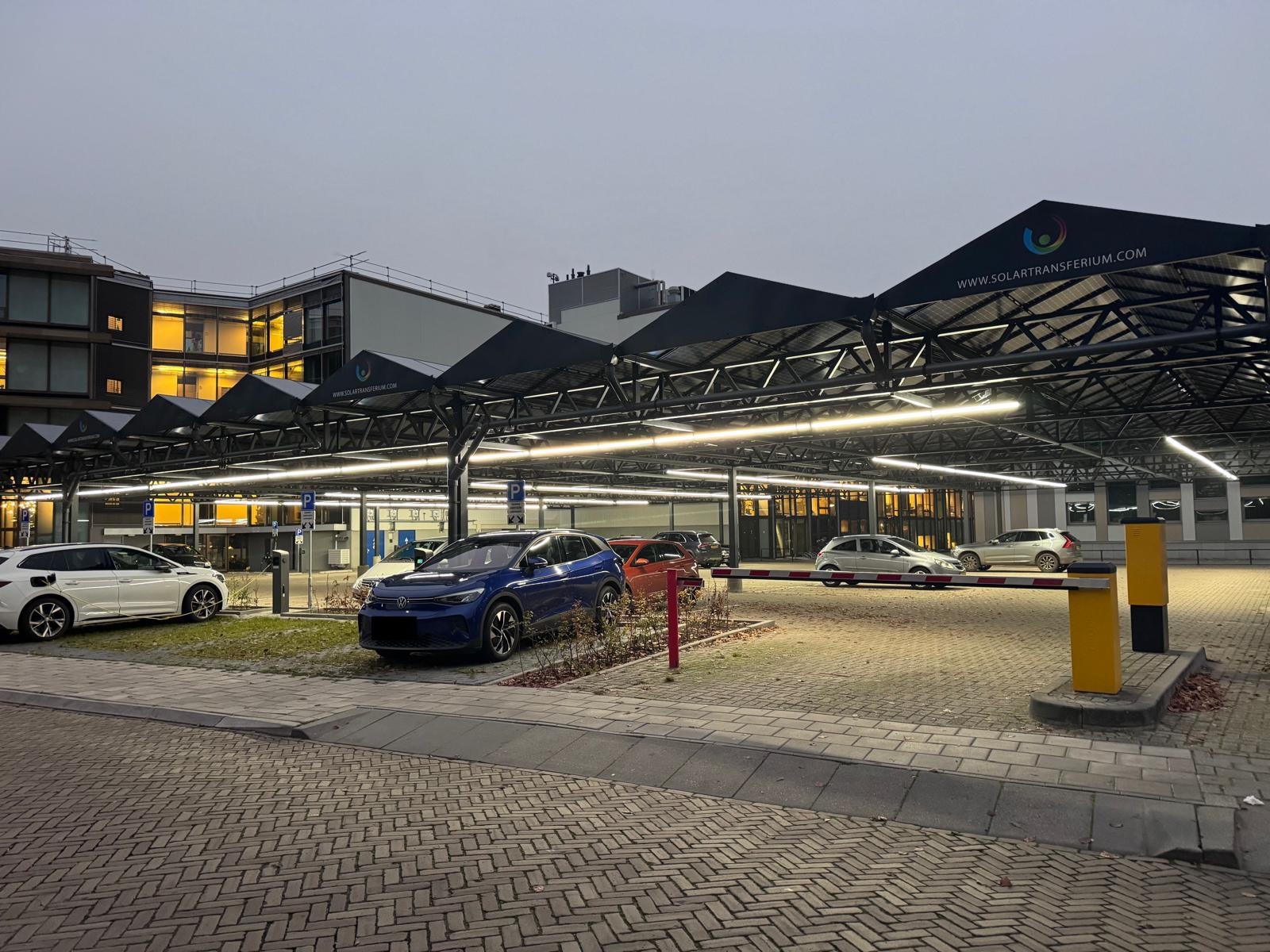
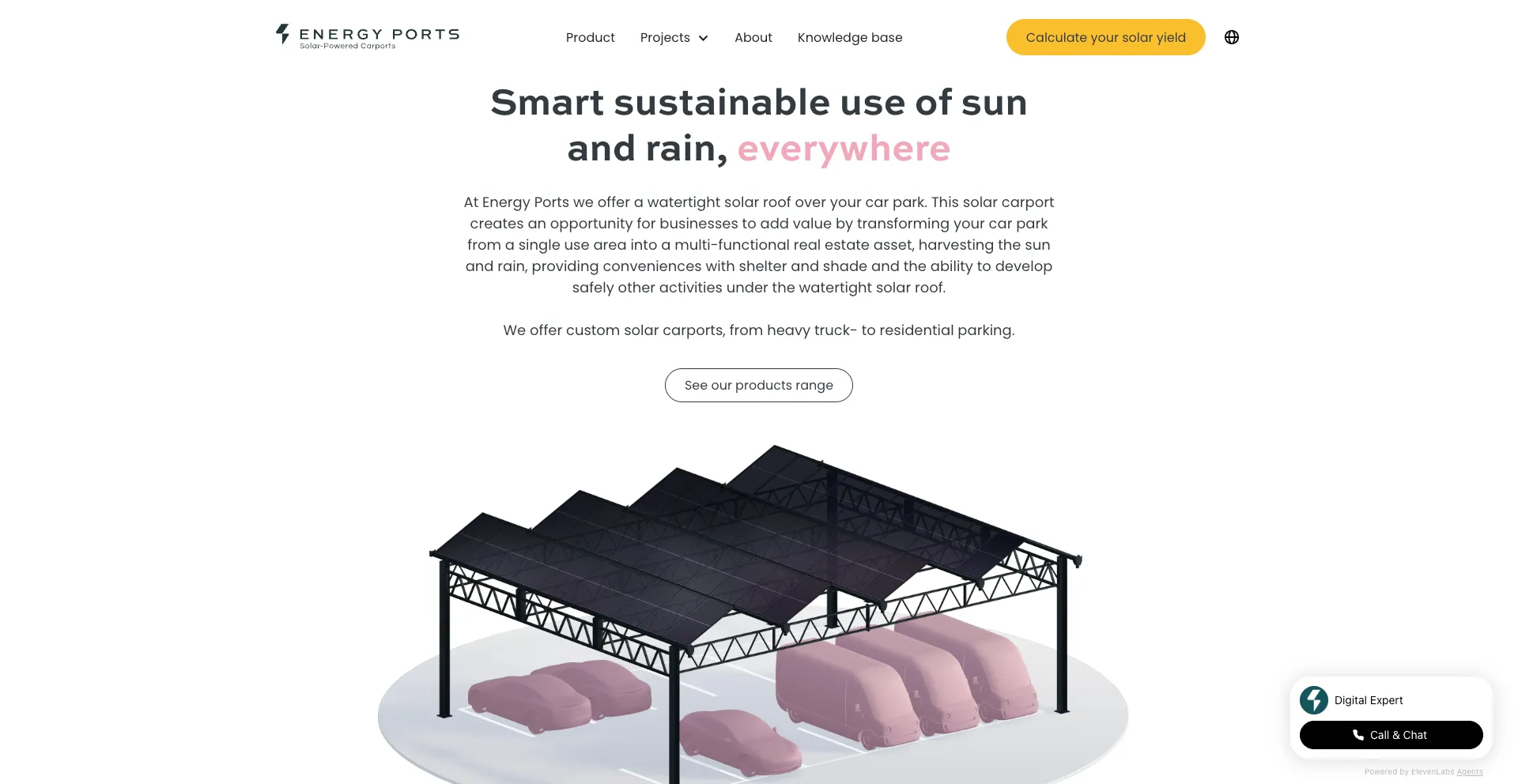
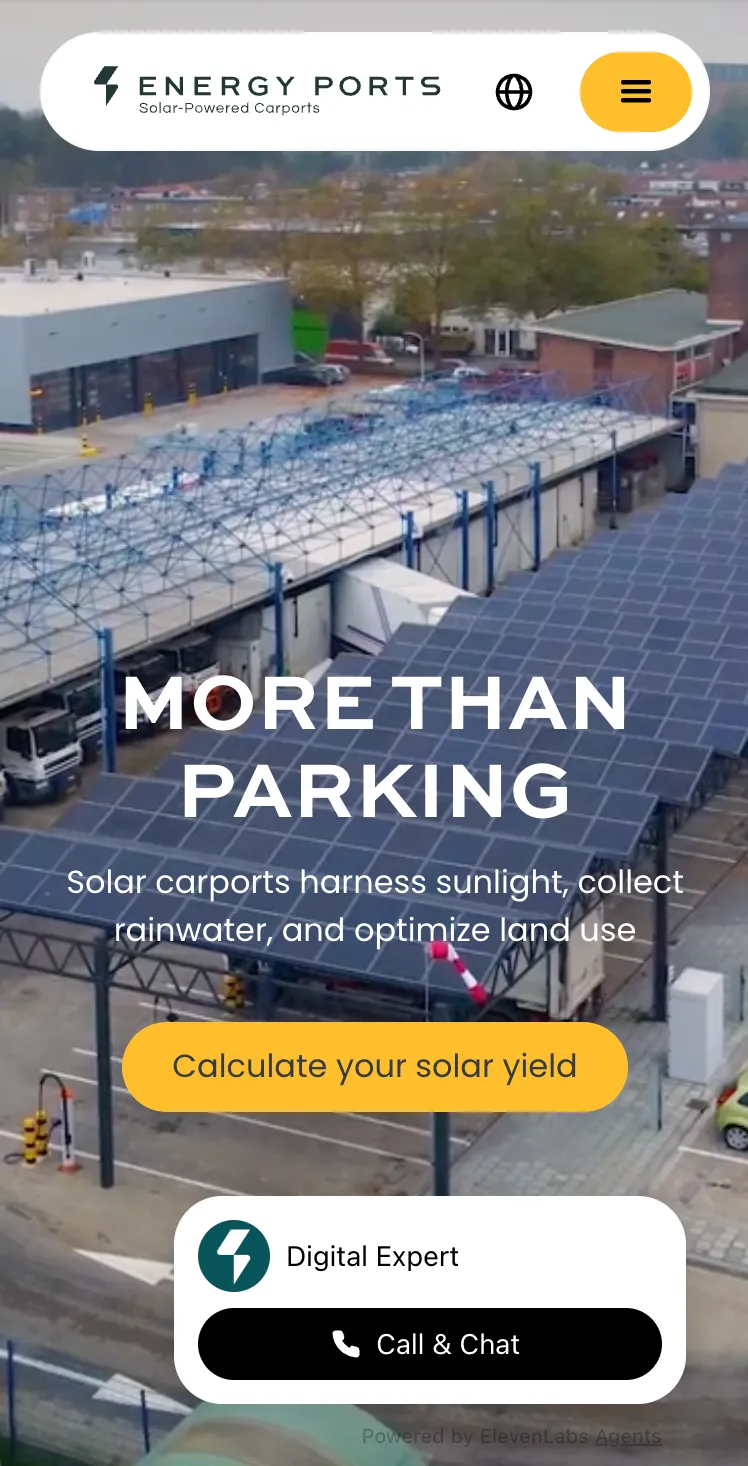
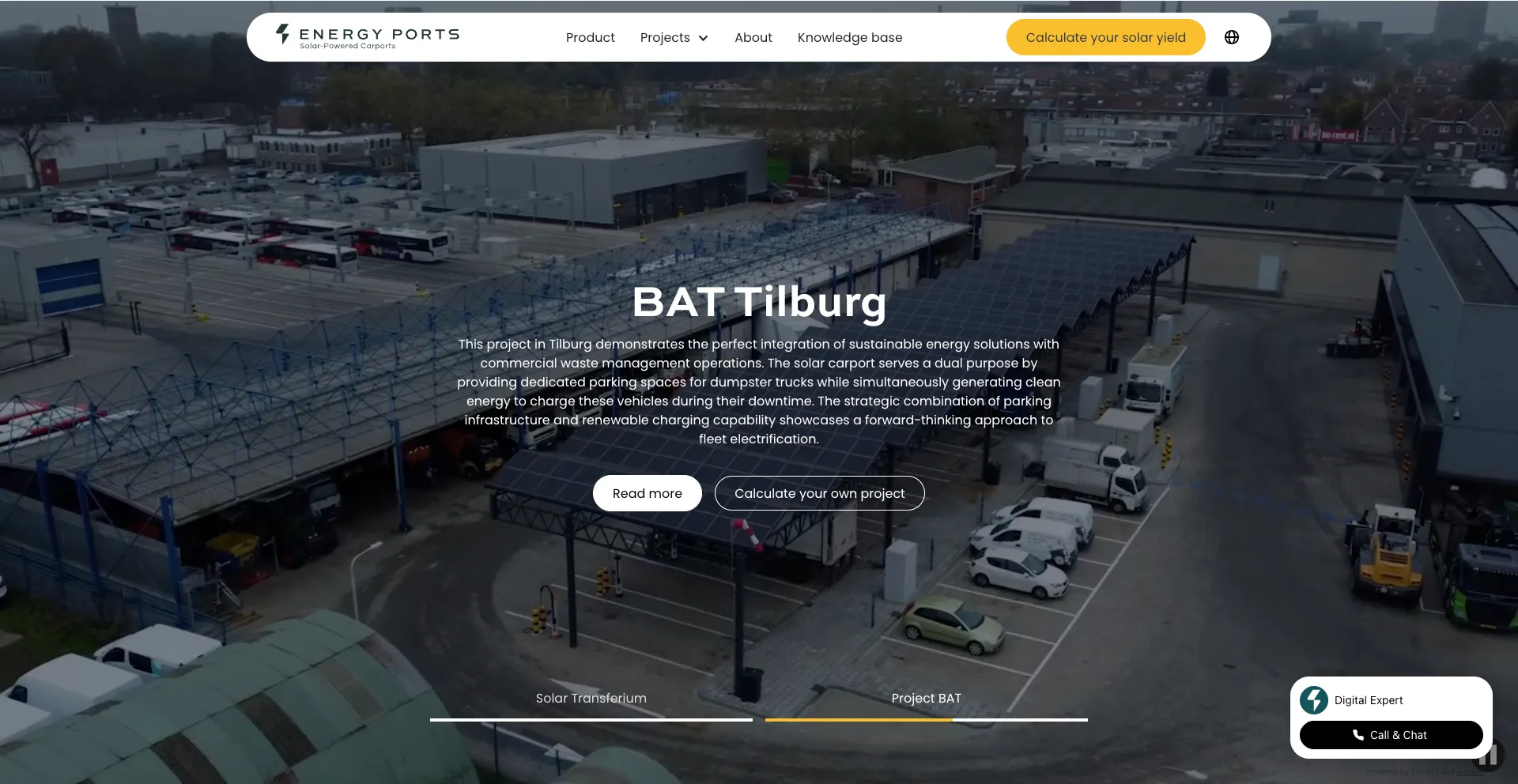
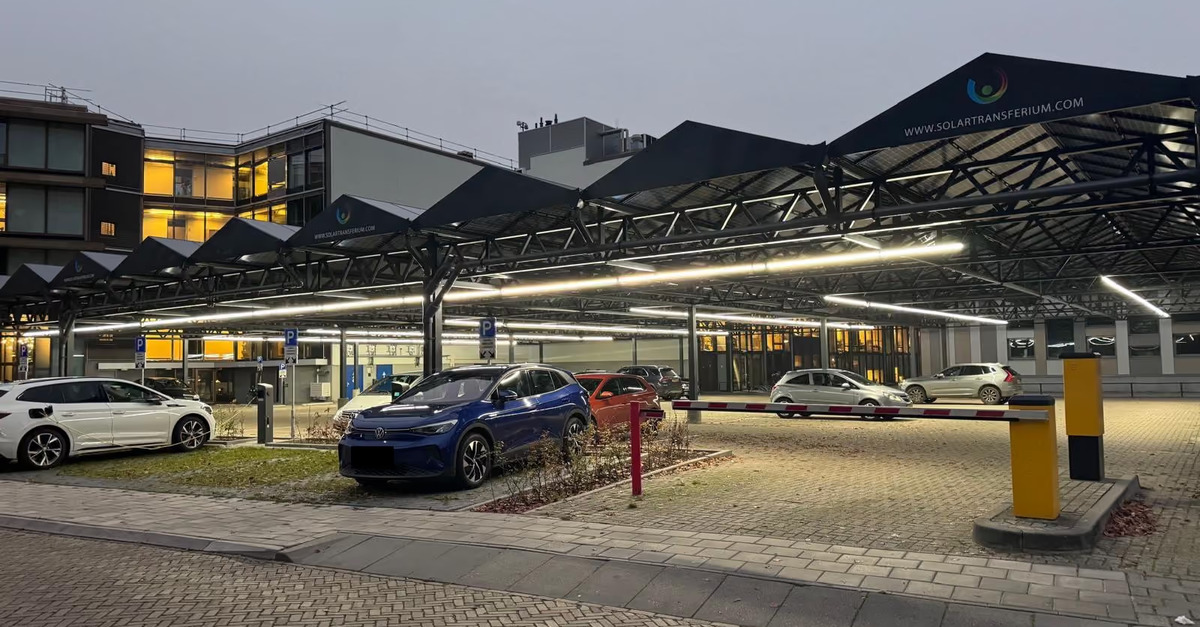
Energy Ports is a Dutch renewable energy company developing modular solar carport solutions that turn parking spaces into energy-producing assets. As they moved from early startup to scale-up, they needed a website that could communicate the technical sophistication of their product and support a more complex sales process. On a tight budget, we built a website that combines strategic structure, interactive 3D storytelling and a flexible CMS foundation.
With 3D scrollytelling, key features are highlighted, making it easy to understand the product. An embedded interactive 3D model allows visitors to explore the modular construction in detail. The 3D elements function as explanatory tools, making the product tangible and easier to understand for both technical evaluators and decision-makers.
The new website communicates a complex product with clarity, supports a more mature sales dialogue and positions the company as a serious Dutch scale-up within renewable energy.
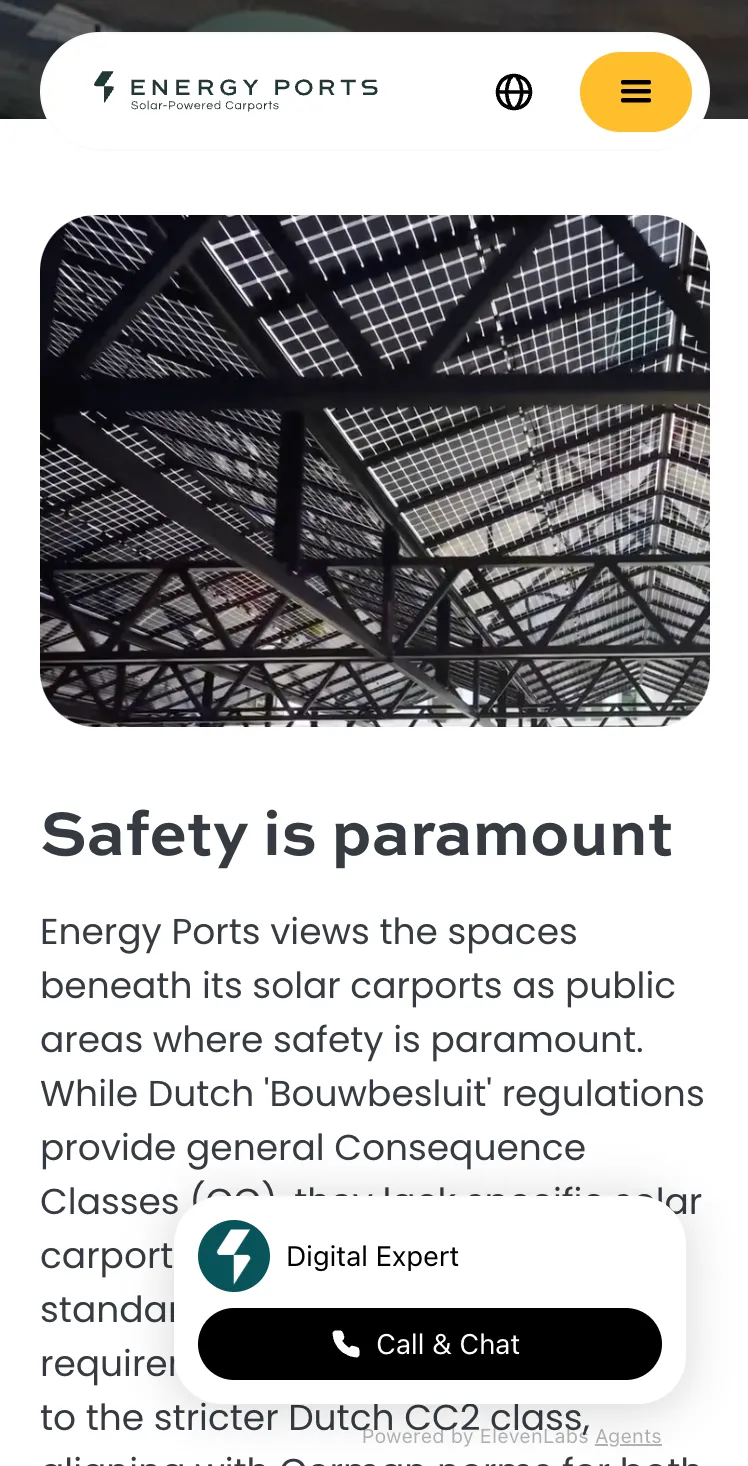
Energy Ports operates in a technically demanding space. Their modular solar structures are engineered products with multiple configurations and components, making them difficult to communicate clearly online.
The website had to support different stakeholders in the buying journey, strengthen credibility in a competitive renewable energy market and provide full editorial control to the team. At the same time, the solution needed to stay within a constrained budget without compromising ambition.
With a tight budget, we structured the collaboration pragmatically. Energy Ports’ in-house designer drafted the wireframes, which we refined into the final UI design. This allowed us to concentrate our effort where it would create the most value: building advanced 3D experiences that explain the product in a way static images cannot. This involved conceptualising the 3D visualisations, converting their CAD into a usable format, drawing the scenes in 3D, connecting the 3D scenes to the interactions on the website and making it all work on mobile as well.
The site was developed in Webflow with a scalable CMS setup, ensuring strong performance, SEO foundations and easy content management for future growth. The 3D scenes were made with Spline.
See other cases